

Resource Library
CORE Group, in collaboration with multiple partner and member organizations, has produced a range of state-of-the-art tools, curriculums and technical resources.
 ORGANIZATION
CORE Group
The Union
YEAR PUBLISHED
2013
DESCRIPTION
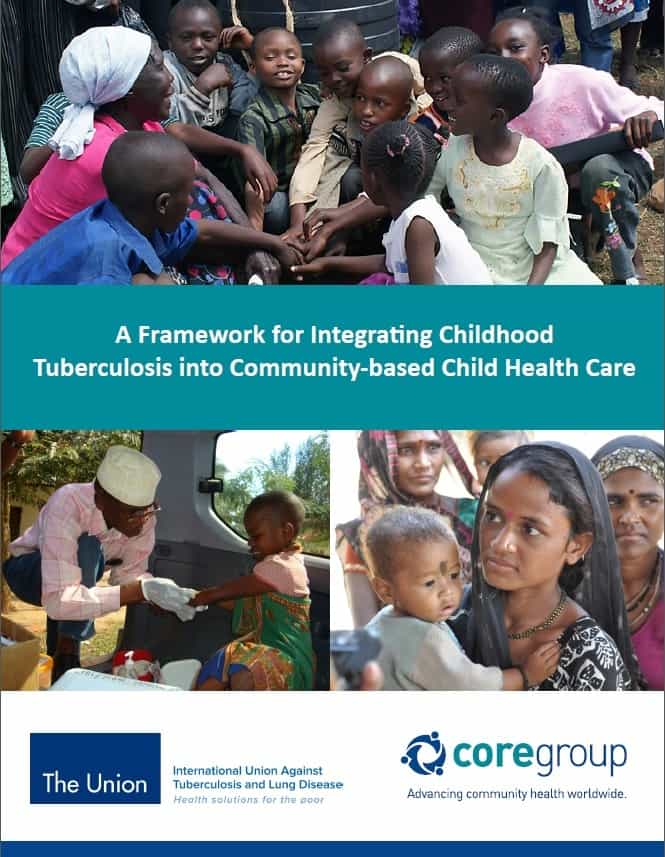
The World Health Organization (WHO) estimates that approximately 500,000 children each year are diagnosed with tuberculosis (TB) and 64,000 HIV-negative children die annually due to TB. The true burden of childhood TB is unknown; children are often undiagnosed and therefore do not receive appropriate care. Childhood TB is often seen with other common childhood illnesses such as HIV/AIDS, pneumonia and malnutrition, and should be considered in sick children, particularly in areas of high TB burden. Family-centered and community based care models and strategies can be used for TB prevention, identification of children with presumptive TB, and for diagnosis and management of children with TB.
A community approach to TB prevention, case finding, and supportive care is needed to ensure that all infants and children with TB receive high quality care, and to ultimately eliminate TB deaths in children. This need was recently outlined in a roadmap for childhood TB, published by the World Health organization with broad support by UNICEF, The Union, USAID and others. Frameworks such as the Integrated Community Case Management (iCCM) and Integrated Management of Childhood Illness (IMCI) can be modified and used to asses TB risk in children, provide contact tracing, refer to higher level facilities for appropriate diagnosis, and provide treatment support.
This document outlines community-based strategies for integrating childhood TB activities with other maternal and child health care services through existing diagnosis and management algorithms. Such activities include prevention, identification of children with presumptive TB, and referral to higher level facilities. The extent to which community- or facility-based tools and strategies such as integrated Community Case Management (iCCM) of common childhood illnesses or Integrated Management of Childhood Illness (IMCI) can support TB identification and care depend on the setting, availability of services, training of health care workers (HCW), and agreements among all stakeholders involved.
This document is written for decision-makers, program managers, and officials at the global policy and national Ministry of Health (MOH) levels who can (in collaboration with NTPs) make changes to country specific child health frameworks, and also to those in the field who can implement interventions directly. The aim of this guide is to emphasize the importance of childhood TB, stimulate discussion and move toward early integration of childhood TB into other maternal and child care activities.
ORGANIZATION
CORE Group
Education Development Center
USAID
YEAR PUBLISHED
2004
DESCRIPTION
This paper presents a framework for assessing strategic partnering as a way to reach populations that have been traditionally bypassed by maternal and child health (MCH) interventions. The framework is applied to the Child Survival Collaborations and Resources (CORE) Group, a network of 35 U.S.-based nongovernmental organizations (NGOs) engaged in MCH activities. Concrete examples are given of how this partnership contributes to improved outcomes for mothers and children; enhanced policy dialogue; expanded local and national capacity; and the generation of new resources. The paper concludes with the identification of relevant lessons for MCH donors and NGOs that might wish to enter into similar partnership arrangements.
ORGANIZATION
CORE Group
YEAR PUBLISHED
2004
DESCRIPTION
This paper presents a framework for assessing strategic partnering as a way to reach populations that have been traditionally bypassed by maternal and child health (MCH) interventions. The framework is applied to the Child Survival Collaborations and Resources (CORE) Group, a network of U.S.-based nongovernmental organizations (NGOs) engaged in MCH activities. Concrete examples are given of how this partnership contributes to improved outcomes for mothers and children; enhanced policy dialogue; expanded local and national capacity; and the generation of new resources. The paper concludes with the identification of relevant lessons for MCH donors and NGOs that might wish to enter into similar partnership arrangements.
ORGANIZATION
Helen Keller International
YEAR PUBLISHED
2013
DESCRIPTION
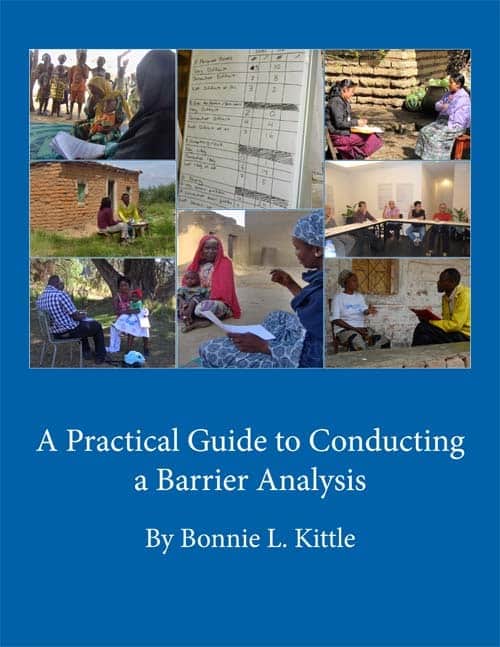
A Practical Guide to Conducting a Barrier Analysis is a training curriculum that builds skills to plan and carry out a Barrier Analysis survey. The very practical, hands-on learning exercises help learners to answer the most common and frequently perplexing questions that arise during implementation. The use of the survey as a behavior change tool is made clear by first introducing the Designing for Behavior Change framework and the determinants of behavior change. The manual uses a step-by-step approach starting with the definition of the behavior to be studied and development of the Barrier Analysis questionnaire. As part of the training course, a Barrier Analysis survey is conducted. The guide covers topics including sampling, interviewing techniques, coding, tabulation and data use. After completing the course using The Practical Guide to Conducting a Barrier Analysis, trainees will be able to effectively plan and implement a Barrier Analysis survey and use the results to inform their behavior change strategy.
Second Edition (2017)
ORGANIZATION
CORE Group
YEAR PUBLISHED
2000
DESCRIPTION
The Bureau of Humanitarian Relief/Private Voluntary Cooperation (BHR/PVC) committed itself to a field review of post-grant sustainability once during the life of the PVC Strategic Plan (1996-2000). In February-March, 2000, a consultant was contracted to do an exploratory study of the sustainability of child survival grants in two countries: Bangladesh and Bolivia. The study consisted of a review of available grant documents; interviews with current and former staff of each PVO and NGO partner and with government officials; and visits to the former working areas of three PVOs/NGOs with more recently-completed grants. The 32 grants included in the study were administered by 13 U.S. registered PVOs along with partners and community groups.It is hoped that this review of the experience with 32 grants in two countries in separate regions will provide a good indication of whether child survival programs are having a lasting influence on child and maternal health as well as suggest ways in which sustainability and the monitoring of sustainability can be more institutionalized within the child survival grants system.
ORGANIZATION
CORE Group
YEAR PUBLISHED
2002
DESCRIPTION
To reach “elusive” communities, organizations will need to meet several important conditions for success. These include the necessary technical skills and resources to address critical health issues cost-effectively; the bonds of trust-developed through long-term field presence that forms the basis for effective work with communities; the ability to engage in rigorous testing of new methodologies; and, systems for effectively disseminating information on best practices to policy-makers and other implementing institutions. New, creative partnerships that link non-governmental organizations (NGOs), governments, community-based organizations (CBOs), other civil society actors, universities, and a host of bilateral and multilateral institutions are another prerequisite for meeting the challenge of reaching those who have been largely unaffected by the child survival and maternal health revolutions. The CORE Group meets all these conditions for success and is thus uniquely positioned to enhance the health and wellbeing of those who have been bypassed by recent child and maternal health advances. Comprised of 35 citizen supported, private voluntary, non-governmental organizations (PVOs) that work in over 140 countries, CORE Group members strengthen primary health care, often in the context of multi-sectoral development programs. Members share a common mission: to strengthen local capacity on a global scale to measurably improve the health and well-being of children and women.
ORGANIZATION
CORE Group
YEAR PUBLISHED
2022
DESCRIPTION
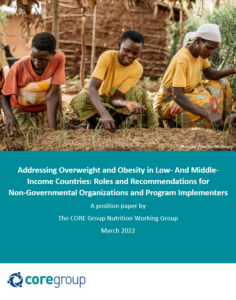
It is the position of the Nutrition Working Group of CORE Group that prevention of overweight and obesity be incorporated into nutrition programming in low- and middle-income countries (LMICs), complementing the current focus on undernutrition programming. The proportion of the global population experiencing overweight and obesity is increasing, particularly in low- and middle-income countries (LMICs) where overweight and obesity exists alongside persistent conditions of undernutrition and among populations often targeted for development and humanitarian assistance, such as women of reproductive age and young children.
The roles identified for NGOs and program implementers included:
- nutrition programming strategies and policies,
- advocacy and stakeholder engagement,
- partnerships in research and implementation
- technical support
ORGANIZATION
CORE Group
CCRDA
YEAR PUBLISHED
2012
DESCRIPTION
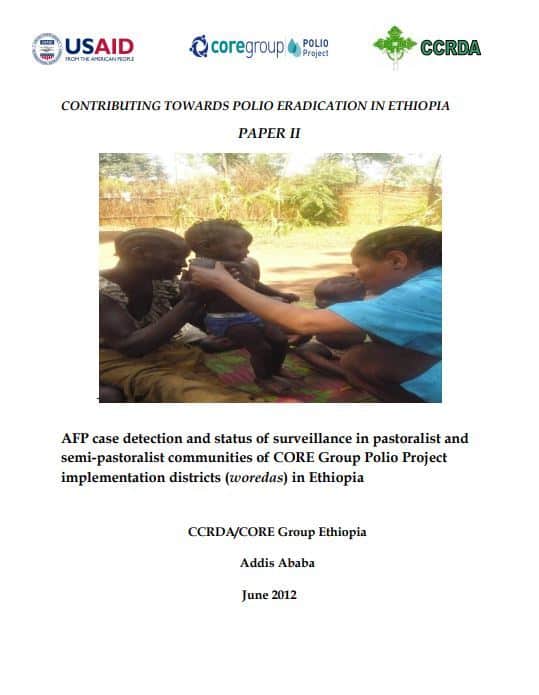
The main objective of this study was to assess AFP surveillance status and enhance better AFP case detection in CGPP implementation semi-pastoralist and pastoralist woredas (districts).
ORGANIZATION
CORE Group
USAID
YEAR PUBLISHED
2004
DESCRIPTION
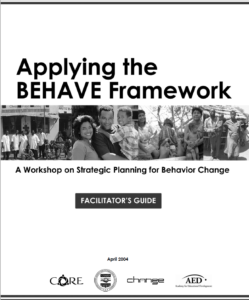
This workshop responds to community health managers’ and planners’ need for a practical behavioral framework that aids them in planning their projects strategically for maximum effectiveness. It is built upon the BEHAVE Framework, developed by the Academy for Educational Development. The workshop trains participants to apply AED’s BEHAVE Framework as described in the most recent version of the Child Survival Grants Project Technical Reference Materials. This framework has wider application to non-health development sectors as well. This introduction is your first step in preparing for a workshop and provides background on how and why the workshop was developed, tips that help you plan for a successful workshop and a number of ready-to-adapt tools, such as checklists and sample letters.
ORGANIZATION
CORE Group
USAID
YEAR PUBLISHED
2002
DESCRIPTION
This guide is for managers, field supervisors, and others who plan, monitor and evaluate community health programs. Most often, the people who have such a responsibility also have to collect data as one of their tasks. The guide will aid them to train others in a simple and rapid method for collecting data to use for planning, monitoring and evaluating community health programs. The method is called Lot Quality Assurance Sampling (LQAS). LQAS has been used by industry for about 75 years for quality-control purposes. But it has been adapted for use by community health practitioners over the past 15 years. LQAS is now used all over the world in community health programs for the following purposes: (1) assessing coverage of key health knowledge and practices in maternal and child health, family planning, and HIV/AIDS; (2) assessing the quality of health worker performance; and (3) assessing disease prevalence. This guide presents LQAS in a very user-friendly way so that almost any supervisor or community health worker can be trained in how to use the method for the first purpose mentioned above—which is the most often-used application.
ORGANIZATION
Food for the Hungry
YEAR PUBLISHED
2010
DESCRIPTION
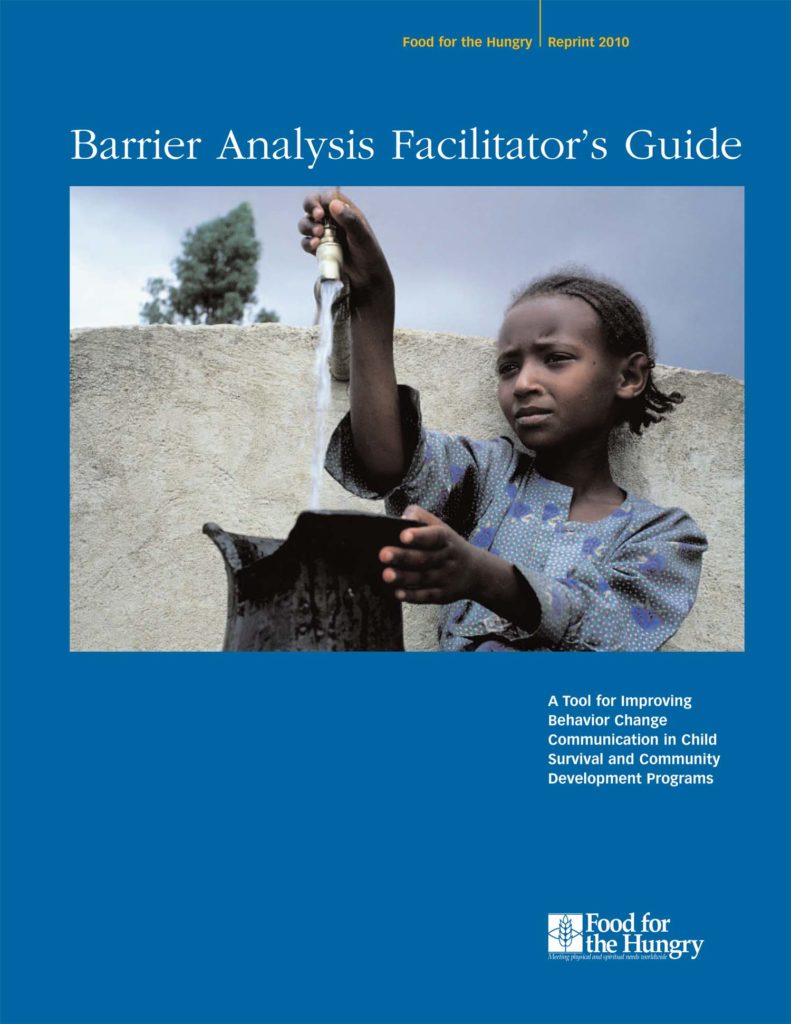
The Barrier Analysis tool is a rapid assessment tool used in community health and other community development project to better identify barriers to behavior change that (if adopted) would have a significant positive impact on the health, nutrition, or well-being of targeted groups (e.g., preschool children) in a project area. The tool also helps staff members to identify positive aspects of behaviors which can be used in health promotion efforts. The tool is in some ways similar to Doer/NonDoer Analysis (part of the BEHAVE framework), but focuses on a much broader list of possible determinants and barriers. The manual focuses on eight determinants: perceived susceptibility, perceived severity, perceived action efficacy, perception of social norms, perceived self efficacy, cues for action, perception of divine will, positive and negative attributes associated with the action.
The methodology can easily be modified to identify a wide range of barriers to behavior change in health, agriculture, nutrition, or other domains, and is applicable to any geographic location in the world. Barrier Analysis was initially developed in the early 1990s using behavioral change principles that were applied to a community-level child health project in the Dominican Republic. The tool was further developed by FH staff members and has been used to train over 100 FH field staff from Mozambique, Kenya, Bolivia and Ethiopia in identifying barriers to behavior change. Since the late 1990s, the tool has been used in Haiti, Kenya, Mozambique, Ethiopia, and Bolivia to discover key barriers to behavior change regarding breastfeeding, other nutritional practices, latrine use, agricultural practices, HIV/AIDS behaviors, and other intervention areas. Additional Information on Barrier Analysis
ORGANIZATION
CORE Group
USAID
YEAR PUBLISHED
2012
DESCRIPTION
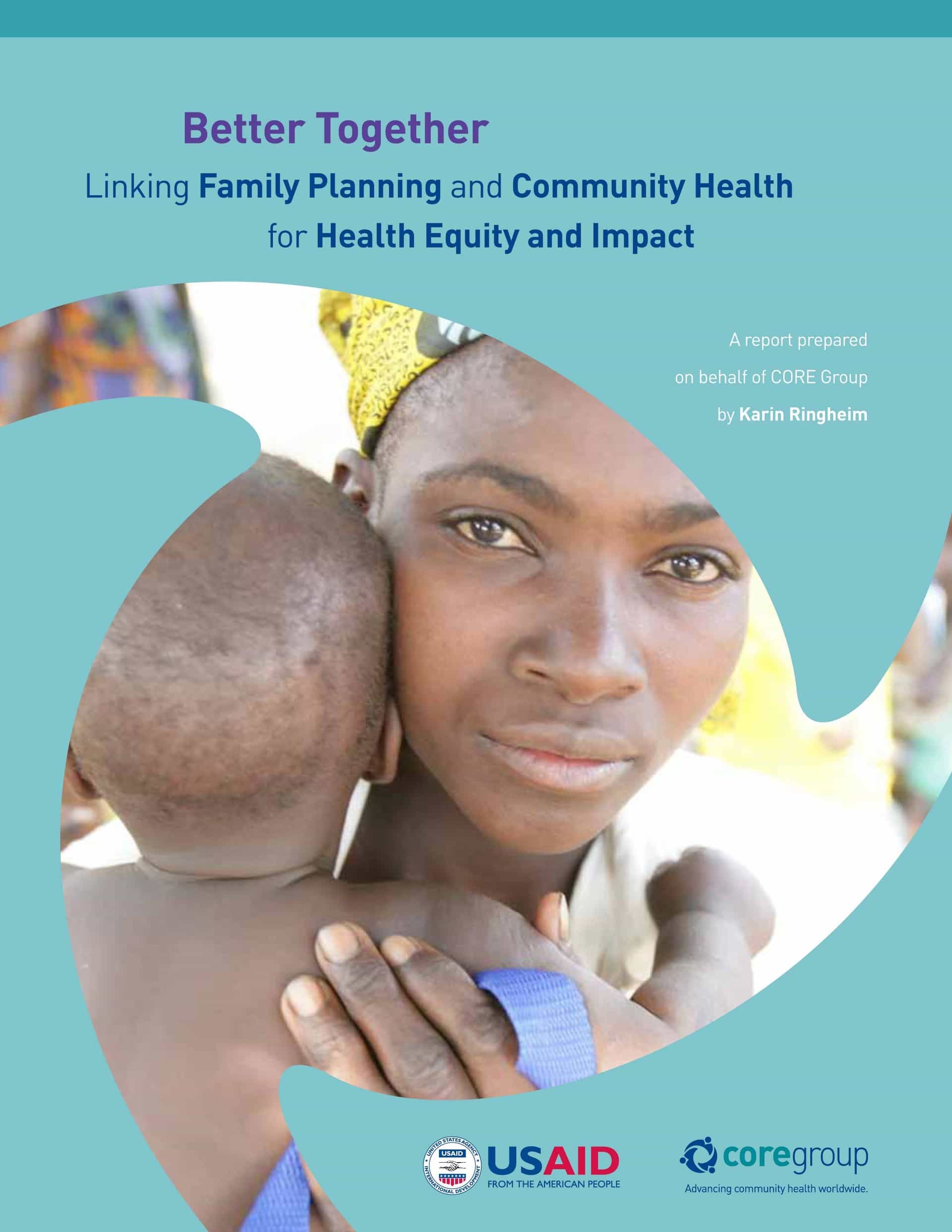
Family planning saves lives and promotes health and well being in a myriad of ways. It is cost effective, well understood and underutilized as a development strategy. Based on more than 125 references, the research presented in this paper provides compelling evidence that integration of family planning is a value-added strategy, saving lives, and spurring progress to prevent diseases, protect the environment, advance food security and nutrition, and improve the health of young people. Despite these benefits, more than 200 million women worldwide, especially poor women and those in rural and remote areas, still lack access to modern contraception. “Smart” integration of family planning is an important strategy to help address that shortfall—as it simultaneously supports other development goals, as described in this report.Integrating family planning with existing health interventions at the community level not only broadens access and equity, but improves substantive understanding of the importance of family planning to the health of women, children and the family, and to reducing unintended pregnancies and abortions. With the endorsement of WHO, USAID and other policymaking bodies, integrated services, including family planning, represent the future of community and primary health care.
ORGANIZATION
Sustainable Development Solutions Network <b \>
Action Contre La Faim (ACF) <b \>
Norwegian Refugee Council (NRC)
YEAR PUBLISHED
2013
DESCRIPTION
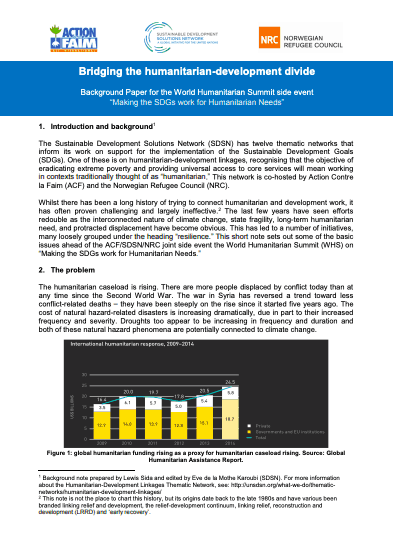
This background paper focuses on achieving the Sustainable Development Goals (SDGs) in terms of humanitarian needs. The Sustainable Development Solutions Network (SDSN) has twelve thematic networks that help work towards the achievement of SDGs. A problem arises in the fact that the humanitarian caseload is constantly rising. It is stated that more people are displaced by conflict in the present than were during World War Two. In addition to this, natural disasters have been becoming more severe and impacting larger groups. Many crises have actually deteriorated and become worse.
ORGANIZATION
Emergency Nutrition Network
YEAR PUBLISHED
2018
DESCRIPTION
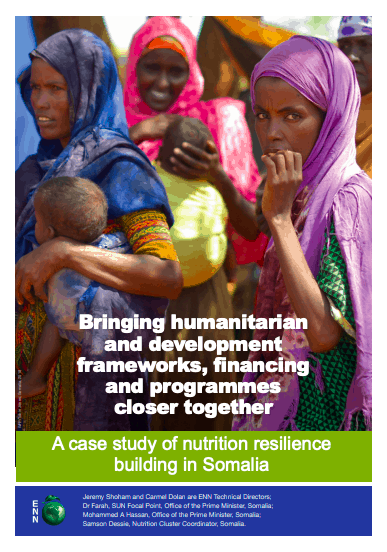
This case study focuses on nutrition resilience and the humanitarian development nexus (HDN) in Somalia. Researchers carried out a series of interviews, field work, and meetings in Nairobi, Mogadishu, and the Dollow District, in order to analyze what opportunities are available in these areas to increase nutrition resilience through the strengthening of the humanitarian development nexus. For the purposes of this piece, nutrition resilience is defined as the ability to maintain adequate nutrition levels when faced with a type of “shock”. It was found that the expansion of nutrition resilience programs in Somalia offer opportunities for the nutrition sector to become more clear on the importance of such and to measure the impact.
 [/vc_column_text]
ORGANIZATION
CORE Group
YEAR PUBLISHED
2017
DESCRIPTION
Guinea-Bissau is heavily impacted by poverty, political unrest, and state withdrawal, leading to a failing health workforce (HW). This study analyzes the human resources for health (HRH) in the country, focusing on how health workers react to the turmoil. Document analysis, focus group discussions, and interviews were utilized for this study. The study shows that the HRH issues stem from a scarcity of funds and a consistent political instability, which stunt any health development. While there are no simple fixes for this issues, it is beneficial to look at the evolution of the health systems and understanding the forces behind the behavior of key actors. Thus, it is concluded that incentives must be used to improve the quality of the system, instead of relying on administrative orders.
ORGANIZATION
CORE Group
Food Security and Nutrition Network
USAID
Food for the Hungry
World Relief
YEAR PUBLISHED
2014
DESCRIPTION
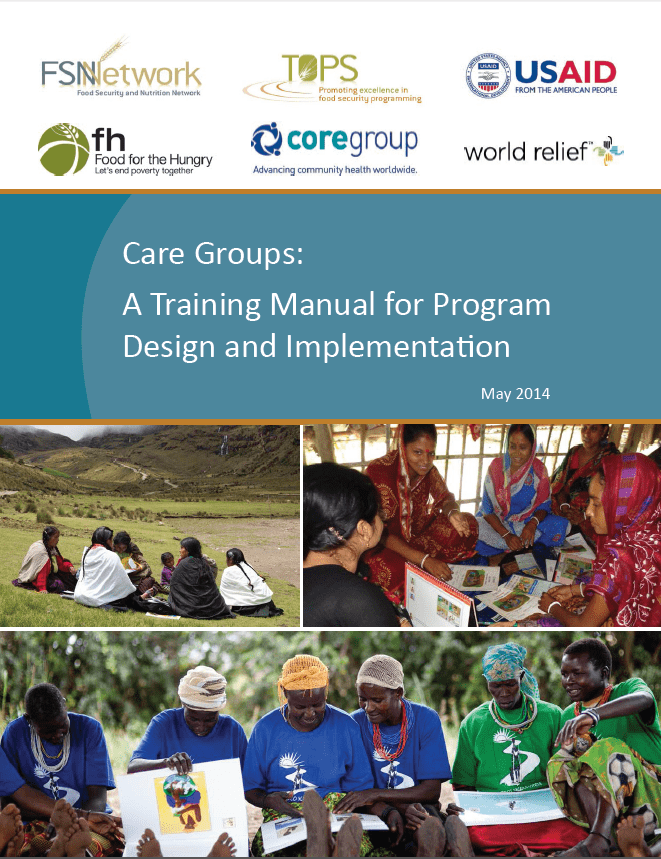
This manual was developed as a training resource for designing, training, implementing and monitoring Care Group (CG) programs. It seeks to help CG approach implementers to clearly understand the structure of the CG approach, how to establish CGs, how to monitor the work of CGs and assess their impact, and how to maintain the quality of the approach through supportive supervision and quality control.
*NEW* Care Groups: A Reference Guide for Practitioners is meant to serve as a companion to the training manual. It was developed in response to practitioner requests and assumes the reader already has a general understanding of the Care Group methodology.
 [/vc_column_text]
ORGANIZATION
Last Mile Health
Academic Journal: BMC Health Services Research
YEAR PUBLISHED
2016
DESCRIPTIONd
This paper works to better understand the recovery efforts of the health sector in Liberia, following a conflict. It focuses in on the changes in how health services are utilized in the five-year period after the conflict. Data from the Liberian Demographic and Health Survey (DHS) was used to find trends. The district of Konobo was of particular interest, giving its remote and isolated nature. It was found that rural regions remained at risk for limited access to health services relative to other parts of the country, in the post-conflict period. A focus on the remote populations must be developed, in order to give them the same health care as the rest of the nation.
ORGANIZATION
CORE Group
YEAR PUBLISHED
2002
DESCRIPTION
This report includes data collected from CORE Benefits Survey that was answered by 28 CORE members. It includes questions and an analysis of the results.
ORGANIZATION
CORE Group
Plan
USAID
YEAR PUBLISHED
2009
DESCRIPTION
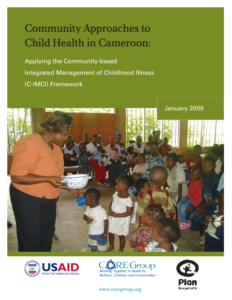
In 1992, the World Health Organization (WHO) and the United Nations Children’s Fund (UNICEF) developed the IMCI strategy to address the five major causes of child mortality (diarrhea, pneumonia, malaria, measles and malnutrition) using an integrated ‘whole child’ approach. This strategy recognizes that children often suffer from multiple illness events at the same time or in close proximity to each other, yet are typically diagnosed by health personnel only for the reported illness. Using a set of flow charts and guidelines, trained health care providers can classify and treat a range of nutritional and infectious disease problems that commonly affect children in that country. In addition to facility-based training, IMCI also recognized the importance of improving the health system infrastructure and supplies, and the role of community and households in determining mortality outcomes.This paper explores how the C-IMCI Framework was applied by Plan in Cameroon, its effectiveness as a strategic approach and the lessons learned from the Plan/Cameroon experience.
ORGANIZATION
CORE Group
USAID
World Relief
YEAR PUBLISHED
2009
DESCRIPTION
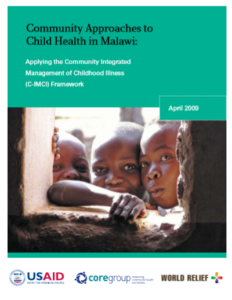
This paper documents World Relief’s approach to C-IMCI interventions at the household level in Malawi, where the government is dedicated to implementing C-IMCI through its community network of health surveillance assistants.
ORGANIZATION
CORE Group
Save the Children
USAID
YEAR PUBLISHED
2010
DESCRIPTION
The purpose of this guide is to provide operational guidance to design, plan, implement, monitor, and/or advocate for CCM that responds to local needs. It is a “how-to” guide for programs, rather than a source of clinical guidance. Definitive technical guidance for case management can be found in the WHO/UNICEF training package Caring for the sick child in the community, the toolkits included in Community case management essentials, and/or national IMCI task forces. Program managers at the district level, from ministries of health and NGOs, are the primary audience. Central-level planners, advocates, academics, and other international health professionals will also find this guide useful.
 [/vc_column_text]
ORGANIZATION
International Rescue Committee
Academic Journal: PLoS Currents
YEAR PUBLISHED
2016
DESCRIPTION
There are a few documented examples of community networks that have used unstructured information to support surveillance during a health emergency. In January 2015, the Ebola Response Consortium rapidly implemented community event-based surveillance for Ebola virus disease at a national scale in Sierra Leone.
ORGANIZATION
CORE Group
YEAR PUBLISHED
2018
DESCRIPTION
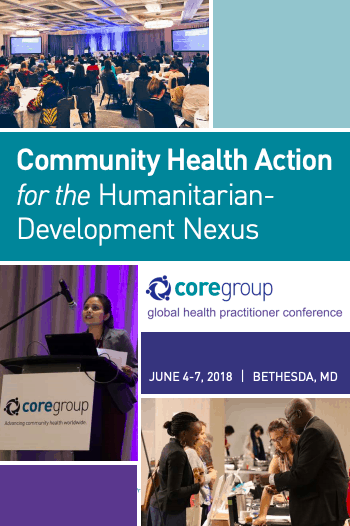
In June 2018, CORE Group hosted its annual Global Health Practitioner conference, this year, with a focus on the Humanitarian-Development Nexus. It gathered 284 participants, representing 103 different organizations and over 18 different countries. Dr. Paul Spiegel, MD, MPH, gave the keynote address, focusing on the need for action at the humanitarian development nexus, specifically around displaced people. The conference was run with the main goals of giving participants new ideas on how to advance policy, new partnerships to advance the future of humanitarian and development approaches, as well as a greater understanding of the importance of a humanitarian and development approach to achieving CORE’s vision of global community health for all.
ORGANIZATION
CORE Group
World Vision
YEAR PUBLISHED
2017
DESCRIPTION
While many Ministry of Health (MoH) community health strategies around the world include community health committees, the reality on the ground shows that these groups are often weak and poorly supported. Literature and field experience suggest that before the strength of individual groups can be considered, there are fundamental programmatic, structural and policy elements that must be in place in order for the community health committee programs to function effectively. It was felt that ministries and partners could benefit from a tool that listed and described these recommended programming components, to use for assessment and programming improvements.
This tool has been developed to help Ministries of Health and supporting organizations to assess community and health facility committee program functionality against 14 elements deemed essential for program success; to review the scope of roles and responsibilities intended for the groups; to identify existing program strengths, and to address those elements assessed as weak. Note that the tool is not intended to assess individual community or health facility groups but rather to assess the functionality of the program as a whole, in line with the understanding that the prerequisites must be in place first, before the strength of the groups themselves can be considered.
 [/vc_column_text]
ORGANIZATION
UNICEF
YEAR PUBLISHED
2018
This study assesses the impact that community health workers (CHWs) had in West Africa during the recent ebola outbreak. In Guinea, Liberia, and Sierra Leona, interviews and focus groups were carried out with national, local, and community stakeholders to gain an idea of the views towards the CHWs. In addition to this, quantitative data was collected through the analysis of trends in the delivery of community MNCH health services. It was determined that while CHWs played significant roles in the outbreak, they arrived late and did not receive enough support, thus hampering their efforts.
ORGANIZATION
Academic Journal: Health Policy and Planning
CORE Group
USAID
YEAR PUBLISHED
2013
DESCRIPTION
Evidence exists that community-based intervention packages can have substantial child and newborn mortality impact, and may help more countries meet Millennium Development Goal 4 (MDG 4) targets. A non-governmental organization (NGO) project using such programming in Mozambique documented an annual decline in under-five mortality rate (U5MR) of 9.3% in a province in which Demographic and Health Survey (DHS) data showed a 4.2% U5MR decline during the same period. To test the generalizability of this finding, the same analysis was applied to a group of projects funded by the US Agency for International Development. All projects collect baseline and endline population coverage data for key child health interventions. U5MR decline was estimated by modelling these coverage changes in the Lives Saved Tool (LiST) and comparing with concurrent measured DHS mortality data. Results indicate that NGO projects implementing community-based intervention packages appear to be effective in reducing child mortality in diverse settings.
ORGANIZATION
CORE Group
USAID
YEAR PUBLISHED
2013
DESCRIPTION
Tuberculosis is both curable and preventable. The cost of diagnosis and the medicine to treat TB is free for patients in most countries. Yet despite this, women, men, children, and babies are still becoming ill and dying from TB every day. Amazing progress has been made by governments, health systems, the World Health Organization, the Stop TB Partnership, private sector practitioners and companies, advocates, and other organizations. But one group still needs a stronger presence on the team: civil society. This includes community members, nongovernmental organizations (NGOs) and civil society organizations (CSOs) of all kinds, at all levels—from local to global—including community health, education and development efforts, religious groups, patient advocates, maternal and child health programs, traditional groups including healers, kinship groups and neighborhood associations, national and international NGOs, and many more.
But how can they help—especially if they are not health experts? In many ways. People living with TB often live in places that government services have a hard time reaching. TB spreads in households and communities, ranging from rural villages to urban apartment blocks to schools to workplaces and crowded places like workers’ hostels and prisons. Within ALL communities, community-oriented efforts can both help prevent the spread of TB AND support diagnosis and treatment. This happens through educating the public and health workers, finding people with TB symptoms and getting them to diagnostic and other services, reducing stigma, offering daily support for those taking the medicines, advocating for improved services—and in many other ways.
This document is designed to serve as a handbook, or primer, for NGOs and CSOs that are considering joining the fight against TB. It provides information on TB and how it is prevented, diagnosed, and treated, how TB programs work on the ground, how communities and CSOs can get involved, and special populations that need extra attention. Step-by-step guidance on getting started in addressing TB, pitfalls to avoid, and a list of useful resources are included.
ORGANIZATION
CORE Group
YEAR PUBLISHED
2016
DESCRIPTION
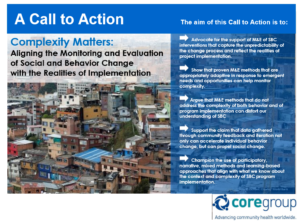
This Call to Action was drafted following the Fall 2015 CORE Group workshop entitled “Behavior Change in the Age of Complexity” and subsequently presented at the International SBCC Summit 2016 and the Spring 2016 CORE Group Meeting. Feedback from audiences at these events has been incorporated into this version of the Call.
The aim of this Call to Action is to:
- Advocate for the support of M&E of SBC interventions that capture the unpredictability of the change process and reflect the realities of project implementation.
- Show that proven M&E methods that are appropriately adaptive in response to emergent needs and opportunities can help monitor complexity.
- Argue that M&E methods that do not address the complexity of both behavior and of program implementation can distort our understanding of SBC
- Support the claim that data gathered through community feedback and iteration not only can accelerate individual behavior change, but can propel social change.
- Champion the use of participatory, narrative, mixed methods and learning-based approaches that align with what we know about the context and complexity of SBC program implementation.
ORGANIZATION CORE Group
YEAR PUBLISHED 2021
DESCRIPTION
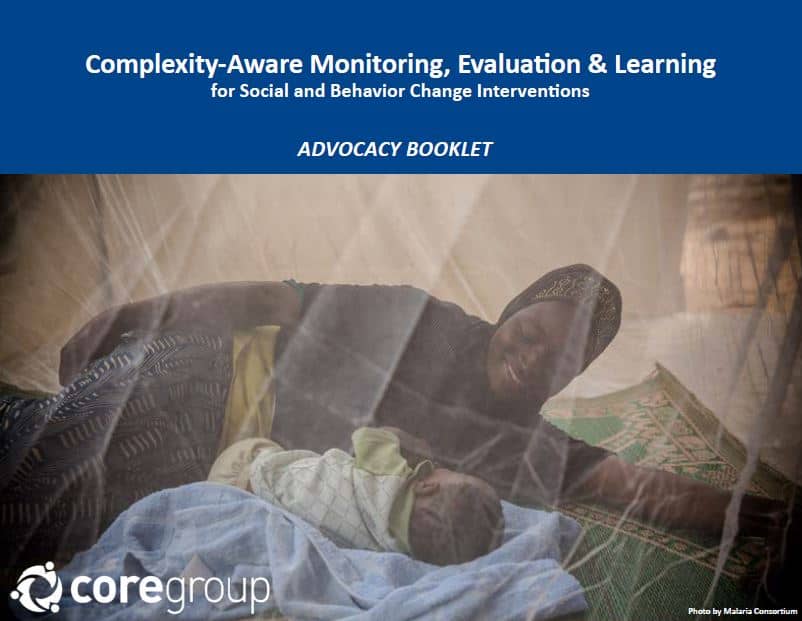
CORE Group’s Social and Behavior Change (SBC) Working Group has developed a set of complexity-aware tools are designed to help design and evaluate SBC-focused interventions. Tools in this set include:
- An advocacy brief to help guide communication with donors and to help build fluency in communicating how to monitor and evaluate SBC interventions
- A core set of indicators related to adaptation, learning, and collaboration that can be used in proposals and work plans
- A checklist intended to help in the consistency and completeness of documenting SBC interventions.
Complexity is a key factor—perhaps the key factor—in social and behavior change (SBC) programming. Complexity affects most SBC interventions through:
- Contextual complexity; the fact that the environment and implementation process itself shape outcomes of an intervention.
- Temporal complexity; interventions evolve over time as target population and implementers change behaviors, and come to new understandings, and programmatic environments shift in response to new constraints, opportunities and priorities.
- Interpretive complexity; as interventions are social activities, practitioners should acknowledge that every stakeholder understands the intervention partially and differently and has a unique perspective
View the Call to Action
ORGANIZATION
CORE Group
USAID
YEAR PUBLISHED
2014
DESCRIPTION
More than ever, international development organizations see the consortium model as a viable framework for addressing the challenges associated with the implementation of complex programs at a significant scale. Yet, those of us with consortium experience understand that establishing a highly-functional consortium with multiple partner organizations is often easier said than done. The CAFÉ Standards from Catholic Relief Services and other conceptual frameworks have helped project designers and planners to address key considerations in the planning of a consortium, but what happens once a consortium is formed and implementation begins?
The Consortium Management and Leadership Training Facilitator’s Guide offers a reflective process to strengthen the consortium management and leadership skills of the senior leadership team of a consortium, technical team leaders within partner organizations, and the senior management of local partner organizations for Food for Peace-funded development food assistance programs.
Although this guide approaches consortium management with foremost consideration for the implications for Food for Peace-funded development food assistance programs, this consortium management and leadership training can serve as a useful framework for strengthening consortia of any type.
ORGANIZATION
American Red Cross
CORE Group
USAID
YEAR PUBLISHED
2008
DESCRIPTION
This paper aims to discuss a project with the purpose to support a multi-sectoral, participatory process resulting in a national policy on community participation in health. The Community Participation Policy for Health (CPP) reached final draft in July 2008. CORE Group resources were used to facilitate a highly participatory process that engaged stakeholders at the national, provincial, district and community levels, and across a broad spectrum of governmental and private organizations involved in community health programs. The new policy broadens the range of activity options for community volunteers to include: surveillance, reporting, health promotion, community mobilization, and community-based treatment. Community volunteer activity under the prior set of policies was limited primarily to reporting between health centers and communities. The previous policy called for one male and one female volunteer per community and up to 35 per health catchment area. The CPP outlines a clear support structure for volunteers and defines incentives to be provided to the volunteer.
ORGANIZATION
CORE Group
YEAR PUBLISHED
2006
DESCRIPTION
The paper discusses a program with the objective to pilot-test the ability of community health workers (CHWs) to provide anti-malarial treatment for uncomplicated malaria in rural community settings. It aimed to achieve this through 1-year pilot funding to three NGOs: Concern Worldwide, International Rescue Committee (IRC), and World Relief. The results indicate that Rwanda’s PNILP has adopted the community-based approach to distribution of anti-malarial medications as its national strategy and is working to expand the program to 12 of its 30 health districts. This represents a significant scaling-up of activities in a relatively short time frame. The collaborative process brought together multiple partners to achieve greater program impact, with the result of successfully training community health workers, implementation of community-based treatment of malaria, and ultimately, increased treatment of children under 5 years for fever.
ORGANIZATION
CORE Group
USAID
YEAR PUBLISHED
2008
DESCRIPTION
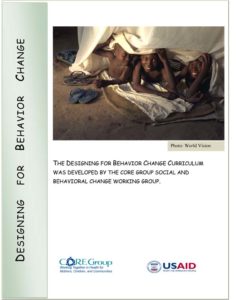
This field-tested, six-day training package will enable private voluntary organizations (PVOs) and partners to replicate the BEHAVE workshops conducted with CORE Group members in multiple countries and regions around the globe. The manual consolidates handouts and facilitator materials with easy-to-use training guidelines.
The “Designing for Behavior Change” workshop responds to community health managers’ and planners’ need for a practical behavioral framework that aids them in planning their projects strategically for maximum effectiveness. It is built upon the BEHAVE Framework, developed by the Academy for Education Development (AED). The workshop trains participants to apply AED’s BEHAVE Framework to improve maternal and child health programming.
This document was adapted in 2013 for agriculture, natural resource management, health and nutrition. View the updated version here.
ORGANIZATION
CORE Group
Food Security and Nutrition Network
USAID
YEAR PUBLISHED
2013
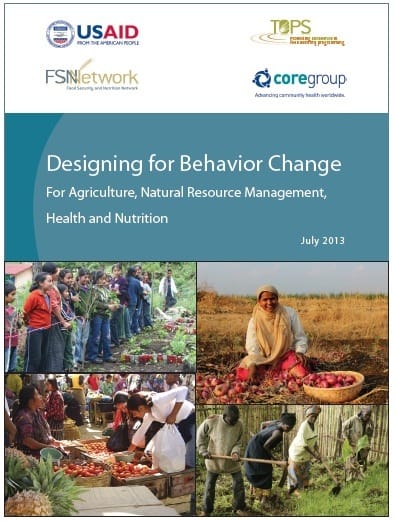
DESCRIPTION
This field-tested, six-day curriculum responds to community development program managers’ and planners’ need for a practical behavioral framework that strategically aids them in planning for maximum effectiveness. The DBC Framework was developed from the earlier BEHAVE Framework (developed by AED) by members of CORE Group’s Social and Behavior Change (SBC) Working Group and the Food Security and Nutrition Network SBC Task Force.
The curriculum enables private voluntary organizations (PVOs) and partners to replicate the DBC workshops conducted with food security practitioners and CORE Group members in multiple countries and regions around the globe. The resource is designed to help train participants to apply the DBC Framework to improve development programming. It combines handouts and facilitator materials with easy-to-use training guidelines. This tool also helps practitioners to respond to FFP’s new RFA guidance on identification of behavioral determinants and creation of a behavior change strategy in their programs.
View the document in additional languages here.
ORGANIZATION
CORE Group
Food Security and Nutrition Network
USAID
YEAR PUBLISHED
2015
DESCRIPTION
Designing Participatory Meetings and Brownbags is part of a series of quick guides produced by the Technical and Operational Performance Support (TOPS) Program to improve knowledge sharing and program learning by development practitioners.
This quick guide provides suggestions and ideas for sessions that will be more conducive to learning, adoption, and action than the more traditional expert-led lecture in front of a passive audience. Underpinning the ideas presented in this guide is the belief that meeting participants have a wealth of useful experiences and ideas. Meetings and brownbags that can unlock the opportunity for sharing, discussion, and debate will produce the best opportunities for learning and a dynamic exchange of information.
The quick guide format, it is hoped, will make a number of easily adopted approaches and techniques accessible to a broad swathe of development practitioners.
ORGANIZATION
USAID
YEAR PUBLISHED
2014
DESCRIPTION
This document is an in-depth review of issues and questions that should be considered when addressing key issues relevant for large-scale CHW programs.
Rather than being an instructional manual, the Reference Guide is meant to provide a framework for those in leadership positions in-country as they consider how to develop, expand and strengthen their CHW program. It was developed in parallel with the URC/Project ASSIST CHW Decision-Making Support Tool, which is also in the process of being released.
The Reference Guide has many practical examples from CHW programs around the world. The contents are in four sections and contain a total of 16 chapters covering such topics as a history of CHW programs, planning, governance and financing, national coordination and partnerships, roles and tasks, recruitment, training, supervision, motivation and incentives, relations with the community and health systems, scaling up, and measurement and data use. There is an appendix containing (1) case studies from Afghanistan, Bangladesh, Brazil, Ethiopia, India, Indonesia, Iran, Nepal, Pakistan, Rwanda, Zambia and Zimbabwe; (2) a summary of perspectives on large-scale CHW programs from key informants; and (3) important resources.
ORGANIZATION
CORE Group
YEAR PUBLISHED
2004
DESCRIPTION
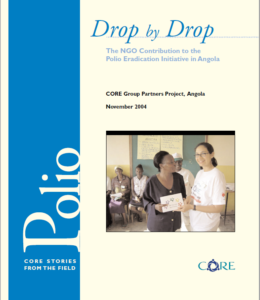
Since 1988, the Global Polio Eradication Initiative (PEI) has worked to eliminate polio from all endemic countries. By increasing the coverage of routine immunization, organizing National Immunization Days, and developing surveillance for acute flaccid paralysis (AFP), the PEI has reduced the world’s incident cases by more than 99%. Between 1988 and mid-2004, the number of countries endemic for polio dropped from 125 to 6. However, the disease remains endemic in parts of Africa, the Indian subcontinent, and the Eastern Mediterranean. This document is the result of a 10-day qualitative methods and “case story” writing workshop carried out by CORE’s Angola partners in March 2004. Workshop participants sought to answer a number of questions surrounding immunization efforts that are not routinely documented by NGOs or academic journals. Tis case-studies answeres some of these questions.
ORGANIZATION
CORE Group
YEAR PUBLISHED
2015
DESCRIPTION
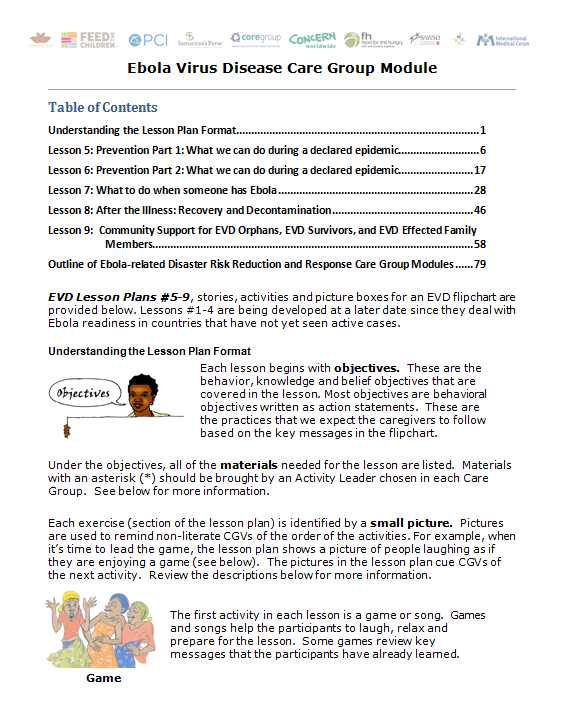
This set of lesson plans to control Ebola Viral Disease is for use in Care Group projects. The plans are designed for use through Care Groups in countries that currently are using that model or that will be in the near future. These lesson plans should add to, not replace, informational materials available in Ebola-affected countries. The lessons and photos are not perfect, and the recommended guidance changed through development, over the course of the epidemic. We highly encourage practitioners to ensure all information and behaviors promoted are aligned with what official agencies (e.g., MOH, CDC) are promoting in their countries, and to make changes to this generic module based on their situation and guidance. Lesson Plans 1-4 are intended for use in countries which have not yet experienced but are at risk for an Ebola outbreak. Lesson Plans 5-9 are designed for use in countries which are currently or have been in the midst of an Ebola epidemic.
 [/vc_column_text]
ORGANIZATION
International Rescue Committee <b \>
Academic Journal: Conflict and Health
YEAR PUBLISHED
2015
DESCRIPTION
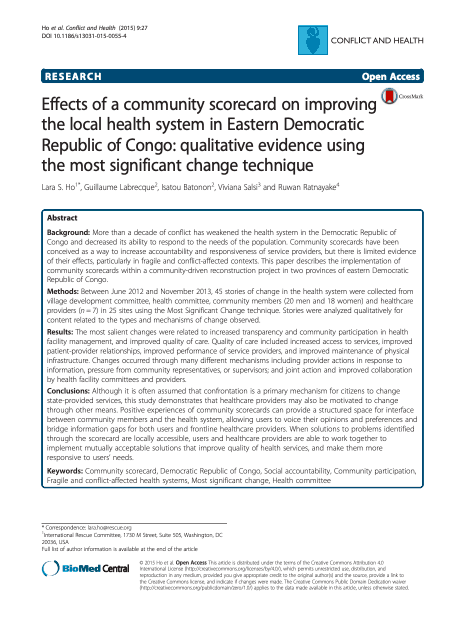
Over a decade of conflict in the Democratic Republic of Congo has weakened the nation’s health system and decreased its ability to address the needs of its population. This study collected stories of change in the health system from a variety of committees and subsequently analyzed. One of the key changes found through this study was that increased transparency and community participation led to better quality of care. It is concluded that with positive experiences, individuals are more likely to voice opinions and be vocal about their community health needs.
ORGANIZATION
CORE Group
USAID
YEAR PUBLISHED
2016
DESCRIPTION
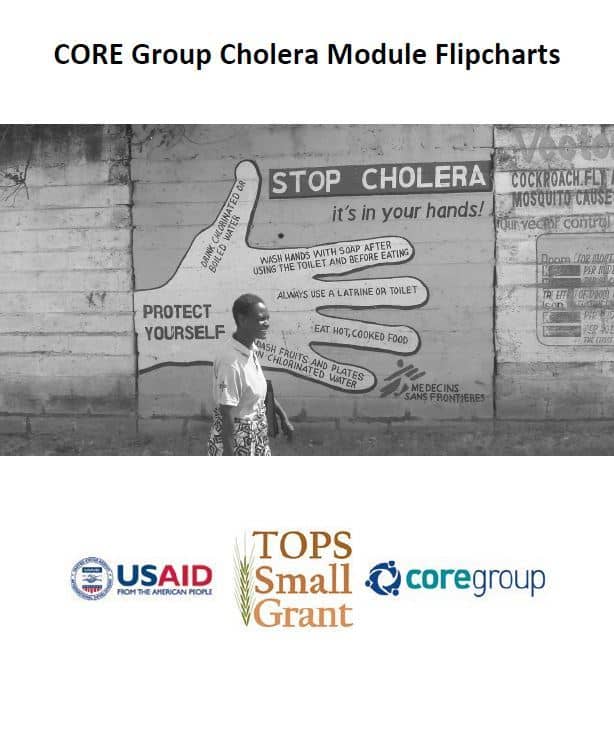
Through a TOPS Program Small Grant, CORE Group has developed a module to improve preparedness for and response of communities in countries at risk of a cholera epidemic. The module consists of four lesson plans with accompanying flipcharts, intended to be delivered through community health workers. The lessons target mothers and caregivers of children under age five, a group that is at particular risk of death if infected. The module shares information about symptoms and risks; what families can do to prevent infection; how, when, and where to seek care; and what actions to take in the aftermath of an outbreak.
ORGANIZATION
CORE Group
CCRDA
Bill & Melinda Gates Foundation
YEAR PUBLISHED
2016
DESCRIPTION
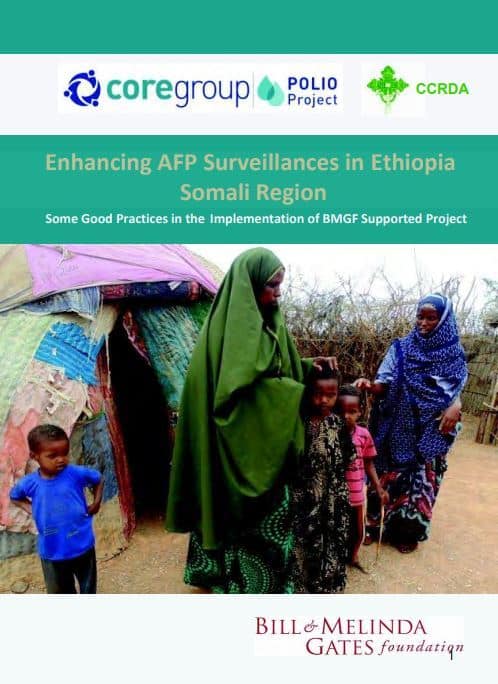
From August 2015 to September 2016, CORE Group Ethiopia Secretariat and implementing partners implemented a project that aimed to enhance AFP surveillances in three woredas through Community Based Surveillance system. This good practices write up contains, among other issues, the problems that existed, the responses made, the results gained following the interventions as well as lessons learnt.
ORGANIZATION
CORE Group
USAID
WI-HER
YEAR PUBLISHED
2015
DESCRIPTION
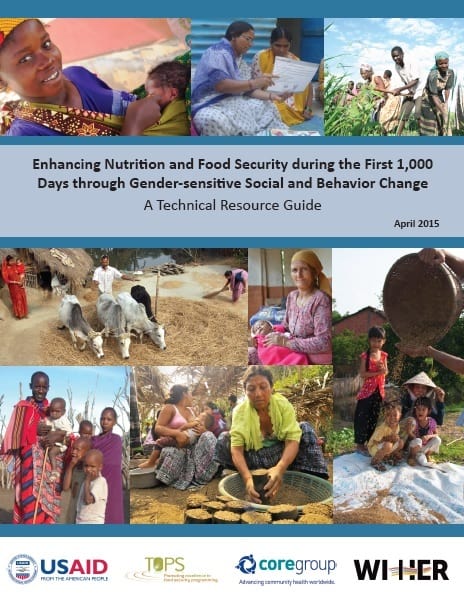
This technical resource guide, along with the complementary technical brief, is designed to build the capacity of development practitioners working in nutrition and food security to plan, implement, and evaluate gender-sensitive SBC programming in order to improve nutritional outcomes for pregnant and lactating women (PLW) and children under two. It does this by providing an overview, rationale, critical actions, best practices, resources, and tools for integrating gender-sensitive SBC into project activities.
The technical resource guide seeks to achieve three main goals:
- Increase the reader’s knowledge about the importance of gender-sensitive SBC programming in nutrition and food security programs/projects;
- Strengthen the planning, implementation, monitoring and evaluation (M&E), and documentation of gender-sensitive projects and gender mainstreaming of organizations to reduce gender gaps in nutrition outcomes; and
- Share resources and tools to support gender-sensitive SBC programming
ORGANIZATION
USAID
YEAR PUBLISHED
2015
DESCRIPTION
Developed in 1997, the Essential Nutrition Actions (ENA) framework has been implemented in Africa, Asia and Latin America. It is a tool for advocacy, planning, training and delivery of an integrated package of interventions to reach the high coverage (>90%) needed to achieve public health impact. As such, partners are now promoting the framework to support the realization of Scaling Up Nutrition (SUN) objectives on the ground.
The updated ENA-EHA training builds on the ENA 2010 Training Trilogy, keeping the overall format of the materials.
Download a flyer summarizing the documents here (French version here).
Understanding the Essential Nutrition Actions and Essential Hygiene Actions Framework [FRENCH] describes the selection of tools and guidance that have been developed to support implementation of the ENA and EHA framework, including key message booklets, training programs, and assessment tools.
 The Essential Nutrition Actions and Essential Hygiene Actions Training Guide: Health Workers and Nutrition Managers (Word Version) [FRENCH (Word Version)] introduces health professionals to the most up-to-date hygiene and nutrition information, and how to deliver nutrition through health visits.
 The Essential Nutrition Actions and Essential Hygiene Actions Reference Manual: Health Workers and Nutrition Managers (Word Version) [FRENCH (Word Version)] accompanies the aforementioned training manual and contains reference information such as UNICEF’s conceptual framework, contact points at which to deliver essential nutrition actions and essential hygiene actions, technical guidance on adolescent and women’s nutrition, family planning, infant and young child feeding, and much more.
 The Essential Nutrition Actions and Essential Hygiene Actions Training Guide: Community Workers (Word Version) [FRENCH (Word Version)] strengthens the capacity of community workers to deliver and promote the essential nutrition and hygiene actions.
 The Essential Nutrition Actions and Essential Hygiene Actions Reference Materials on Key Practices: Community Workers (Word Version) [FRENCH (Word Version)] accompanies the Community Worker training as a job aid, covering key concepts for each of the nutrition and hygiene practices as well as some ideas on how Homestead Food production (HFP) can be developed to improve household dietary quality and diversity.
ESSENTIAL WASH ACTIONS: A Training and Reference Pack to Supplement Essential Nutrition Actions further elaborates the EHAs to facilitate integrating them effectively into nutrition-sensitive nutrition and food security programming, as well facilitating ‘behavior-centered’ approaches within standalone WASH initiatives.
ORGANIZATION
Global Fund <b \>
GAVI Alliance <b \>
Academic Journal: Conflict and Health
YEAR PUBLISHED
2014
DESCRIPTION
This study aims to explore the influence of Global Health Initiatives (GHIs) on health systems in conflict-affected countries. It focuses on two leading GHIs, the Global Fund and the GAVI alliance. An analytical review of published literature was used in order to identify evidence on the role of these two GHIs. It was shown that GHIs increasingly invest in conflict-affected countries, which helps speed up development of health systems and human resources in these countries. However, this investment also can lead to the distortion of priorities inside the health systems and burdensome reporting requirements. It is concluded that there is increasing engagement of these two GHIs, but it must be support by context-specific policies.
ORGANIZATION
CORE Group
YEAR PUBLISHED
2012
DESCRIPTION
Getting the Knack of NACS was a two-day state-of-the-art (SOTA) meeting aimed at taking stock of progress since the NACS meeting in Jinja, Uganda in 2010, examining the evidence base to date and further advancing the SOTA on NACS in the context of HIV and health care more broadly. While a wide range of issues emerged, some of the key ones were: Defining NACS, NACS is doable, Partnerships are critical, NACS is for everyone, Let’s do it well, What is the evidence?, NACS is not just curative, Demand needs to be created for nutrition services and Multi-sectoral linkages. The SOTA participants concluded that if we are to advance the NACS framework and realize its potential, NACS must be marketed to a wider audience; i.e., not just to USG partners, but to the international development community more generally.
 [/vc_column_text]
ORGANIZATION
Academic Journal: Medicine, Conflict and Survival
YEAR PUBLISHED
2012
DESCRIPTION
This paper analyzes the impact that the political instability, economic volatility, infrastructural collapse, and human resource scarcity of fragile states have on their respective health systems. There is a particular focus on sexual and reproductive health in these fragile, post-conflict states. It is determined that fragile states usually carry a heavier burden of illness and disease, primarily amongst their vulnerable populations. Mental, sexual, reproductive, and children’s health are especially negatively impacted by violent political conflict in these areas.
 [/vc_column_text]
ORGANIZATION
Medicus Mundi
YEAR PUBLISHED
2012
DESCRIPTION
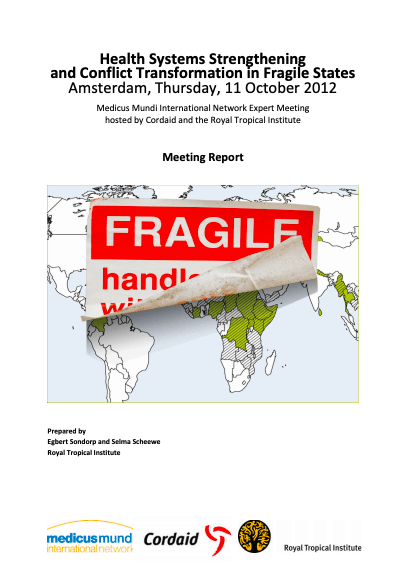
On October 11th, 2012, in Amsterdam, Medicus Mundi International members, and representatives from NGOs/Academic Institutions came together to discuss the strengthening of health systems. The main question was whether it was possible to strengthen health systems and address fragility at the same time. Eleven selected country case studies were discussed in three working groups. These studies showed that it was possible to strengthen and address fragility at the same time, given proper strategies are used. The need for developing a deeper understand as health as an instrument of change was stressed, as well as the research needed to make this possible.
ORGANIZATIONS
American Academy of Pediatrics
CORE Group
Laerdal
NICHD
PATH
Save the Children
USAID
YEAR PUBLISHED
2011
DESCRIPTION
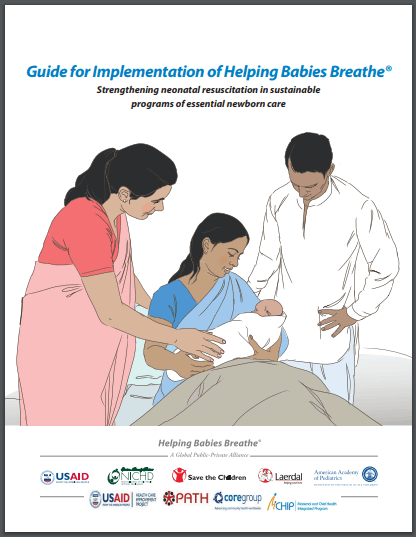
Helping Babies Breathe is designed to coordinate with other interventions in a package selected to improve neonatal and maternal health. HBB can be used as the resuscitation component in courses teaching Essential Newborn Care (WHO) and courses in midwifery skills. HBB can be used at all levels in the health system. It extends resuscitation training to first-level health facilities and health workers in resource-limited settings, where these skills are most lacking. It also can be used in higher-level health facilities, including tertiary facilities, where it complements, but does not replace, comprehensive resuscitation programs such as the Neonatal Resuscitation Program (NRP). Both HBB and NRP teach the same first steps in resuscitation, but NRP also includes the use of supplemental oxygen, chest compressions, intubation, and medications.
ORGANIZATION
CORE Group
Family Health International (FHI)
Impact
USAID
YEAR PUBLISHED
2002
DESCRIPTION
This document is a guide to help readers consider their needs and abilities to implement any technical aspect of child survival. Because HIV must be addressed at many levels, Family Health International (FHI) and other agencies developed the concept of an expanded and comprehensive response (ECR) to HIV/AIDS. This document is designed to give private voluntary organizations (PVOs) a clearer sense of what is meant by “comprehensive response” to HIV/AIDS, and a better understanding of where their own interests and strengths are in that response, in their own context. Specific objectives are to: Convey the importance of comprehensive HIV programming in child survival strategies in HIV-affected communities; describe the synergy of interlinking technical interventions; discuss ECR issues in implementing technical strategies for HIV prevention, care and support; list key questions for different aspects of implementation for ECR technical strategies; outline the role of community groups in implementing and supporting technical interventions and provide references and resources for further reading.
ORGANIZATIONS
CORE Group
USAID
YEAR PUBLISHED
2011
DESCRIPTION
Communities play instrumental roles in improving health outcomes within the scope of national health systems. However, the role of the community in health system strengthening, as well as specific components of the community health sub-system itself have not been systematically documented. In this paper, we explore the relationship among the community, the community health sub-system and the national health system, and propose a set of actors, structures and processes critical for promoting positive health outcomes, especially in under-served areas.
The purpose of this document is to draw attention to the undervalued resources of a community in programming to improve health status for maternal and child health (MCH), infectious diseases, nutrition, family planning (FP) and chronic diseases. We apply a systems thinking lens to review the actors, structure and processes of community contexts where national health service systems interact with individual beneficiaries. In taking this approach, we identify links between the communities and national health systems and propose a set of key components comprising a community health sub-system that serves as the interface between community realities and health system elements, where health services, health workers, community dynamics and actors, and cultural norms and practices interact and promote improved health outcomes. In conclusion, we propose that the social capital within a community and between the community and the national health system actors is a critical element, perhaps a seventh building block of a highly functioning health system, which needs strengthening and further research.
 [/vc_column_text]
ORGANIZATION
Emergency Nutrition Network (ENN)
YEAR PUBLISHED
2010
DESCRIPTION
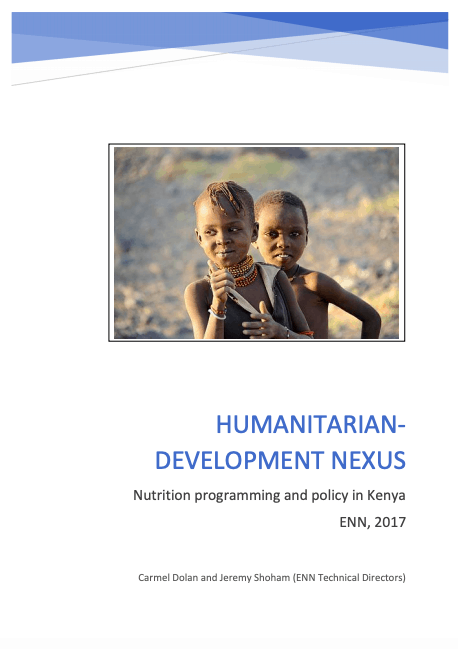
This article is a case study carried out by the ENN during a recent field visit to Kenya, examining the experiences of the humanitarian development nexus (HDN) through a nutrition-specific and nutrition-sensitive lens. Kenya is close to meeting World Health Assembly nutrition targets, due to successful scale-ups of high impact
nutrition interventions. There is a heavy focus on the management of acute malnutrition.
ORGANIZATION
CORE Group
YEAR PUBLISHED
2004
DESCRIPTION
Despite progress made over the last two decades in reducing <5 mortality in Latin American and Caribbean (LAC) countries, neonatal mortality rates have remained largely unchanged, make up an increasing proportion of remaining <5 mortality, and constitute a significant proportion of neonatal deaths worldwide. The highest neonatal mortality levels in LAC countries are concentrated in areas that are remote geographically and/or inhabited by marginalized indigenous populations, areas characterized by poor health indicators related to disparities in resources, health care, and education. This report examines community-based neonatal health interventions in the LAC region from both theoretical and programmatic perspectives to identify operational considerations for effective neonatal health care. The report was developed based on an extensive review of health theory, peer reviewed journal articles, and gray literature, as well as program data collected by the authors through interviews and pertinent documents from PVOs and NGOs engaged in neonatal care interventions in LAC countries.
ORGANIZATION
Emergency Nutrition Network
YEAR PUBLISHED
2016
DESCRIPTION
In 2011, UNHCR and partners renewed efforts to support maternal and IYCF nutrition (MIYCN) in established and new Dadaab refugee camps in Kenya where GAM and maternal anaemia were prevalent and feeding practices sub-optimal. Led by ACF, the initiative developed a common results framework and communication model with nutrition and health services and allied sectors such as WASH and livelihoods. Mother-to-mother support groups were at the cornerstone of the intervention. By 2014, GAM rates had fallen in camps, largely attributable to improved MIYCN. A pilot of the UNHCR IYCF friendly framework will build on lessons and success to date.
 [/vc_column_text]
ORGANIZATION
Institute of Tropical Medicine <b \>
The Belgian Development Cooperation <b \>
Because Health
YEAR PUBLISHED
2015
DESCRIPTION
This piece summarizes the discussions of the International Roundtable on Health Systems Strengthening in Fragile Settings, held on February 12th, 2015 in Belgium. The objectives of this roundtable were to exchange past experiences of HSS interventions in fragile settings, to initiate mutual learning between a range of actors involved in health care delivery in challenging operational environments, and to how actors can collaborate to operationalize guiding principles on engagement in fragile settings.
ORGANIZATION
CORE Group
USAID
YEAR PUBLISHED
2004
DESCRIPTION
This training of survey trainers (TOST) curriculum is designed to prepare KPC TOST participants to replicate training activities to teach KPC field staff to carry out a KPC survey.
CORE Group’s KPC Curriculum consists of a set of trainer’s guides and participant handouts and resources to teach trainers and field workers to carry out a KPC survey. Based on extensive field testing in several countries, the complete set includes three separate instructional manuals.
- KPC Training of Survey Trainers: Trainer’s Guide and Participant’s Manual and Workbook with training development exercises, dialogue education warm-ups, and background information on organizing a five-day KPC workshop.
- KPC Survey Training: Trainer’s Guide which provides detailed instructions on administering a survey, selecting a sample selection, developing a survey instrument, training supervisors and interviewers, maintaining quality, analyzing results and using the results for program planning.
- KPC Survey Training: Participant’s Manuals and Workbooks includes a full set of handouts (including those for use as slides or overheads) for core team members, supervisor and interviewer use and for post-survey team analysis.
ORGANIZATION
Johns Hopkins University
YEAR PUBLISHED
2001
DESCRIPTION
The present guide, is an updated version of the Survey Trainer’s Guide by The Johns Hopkins University. The KPC2000+ is a revision of the original questionnaire developed by PVO CSSP, and is a product of the Child Survival Technical Support Project (CSTS) and the CORE Monitoring and Evaluation Working Group (MEWG). Like the original KPC manual, the KPC2000+ Field Guide aims to assist projects in planning, conducting, and analyzing a KPC survey. The present guide contains expanded sections on sampling options for KPC surveys, KPC data analysis, and the use of KPC data for health decisionmaking. It also stresses the importance of incorporating qualitative research, partnership-building, and capacity development into the KPC process.
ORGANIZATION
MOMENTUM
YEAR PUBLISHED
2024
DESCRIPTION
Early lessons from COVID-19 vaccination experience demonstrate that using diverse delivery strategies such as mass vaccination in combination with community engagement resulted in a 15 percent increase in uptake in SSA (WHO Africa 2022a). We postulate that using trusted community models and structures is critical to promote demand for, confidence in, and uptake of COVID-19 vaccines in SSA.
The objectives of this landscape analysis were to:
- identify elements of community approaches that can be adapted to improve COVID-19 immunization in Africa;
- analyze barriers and facilitators of these models/approaches within the definition of “community engagement and partnerships;” and
- provide key considerations for application in SSA country contexts.
 [/vc_column_text]
ORGANIZATION
ReBuild Consortium <b \>
Academic Journal: Health Policy and Planning
YEAR PUBLISHED
2014
DESCRIPTION
This study focuses on health workers who have lived through conflict in Uganda’s four northern districts, Pader, Gulu, Amurur, and Kitgum. These districts were home to over 90% of the displaced individuals in Uganda’s conflict. Interviews were conducted on health workers in these areas, in order to gain insight on their experiences during this time of conflict. The workers were frequently exposed to abduction, ambush, and injury.
ORGANIZATION
CORE Group
YEAR PUBLISHED
2008
DESCRIPTION
During the Child Survival Health Grants Program, Child Survival grantees were required to use the Rapid CATCH tool, which establishes a set of standard indicators to collect baseline and end of project data. This data is used to demonstrate the important contributions of the child survival portfolio to increase coverage and improve practices. In 2006, indicators for Rapid CATCH become more complex. This, along with the emergence of integrated programs that address the needs of multiple target populations created sampling challenges for grantees. The CORE Group M&E Working Group created this guidance document to clearly outline the recommended protocol for parallel sampling using Lot Quality Assurance Sampling (LQAS ) to collect Rapid CATCH information. The LQAS guide is for managers, field supervisors and others who plan, monitor and evaluate community health programs. The guide will aid them to train others in a simple and rapid method for collecting data. There is also a Guidance FAQ available.
The LQAS Excel Spreadsheets are designed to provide all of the calculations needed to determine if each Supervision Area (SA) has met the Decision Rule (DR) for every indicator entered, as well as calculating the average coverage for the entire project area (all Supervision Areas combined). Simply list each indicator collected in the data entry tabs, and then enter the responses for each indicator. The spreadsheet then automatically calculates the Decision Rules, whether each SA has met the Decision Rule, and the average coverage for each indicator, and the results are displayed in the LQAS summary tabs.
ORGANIZATION
CORE Group
Food for the Hungry
Food Security and Nutrition Network
USAID
YEAR PUBLISHED
2005
DESCRIPTION
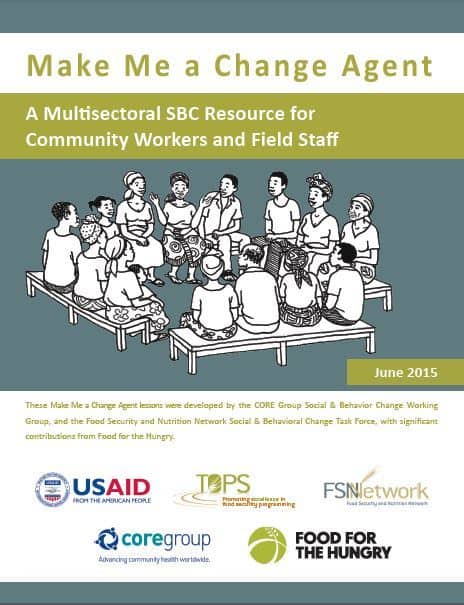
These lessons seek to build the skills of community-level workers, such as community development agents, community health workers, and agriculture extension agents, so that they can be more effective behavior change promoters in their communities. The lessons are not sector specific, but are tried and true generic skills, such as communication and storytelling, that can help a development worker in any sector become more effective as an agent of behavior change.
ORGANIZATION
CORE Group
USAID
YEAR PUBLISHED
2004
DESCRIPTION
This guide is designed to assist program designers working for international NGOs in selecting essential components, actions and appropriate indicators for chosen interventions in maternal and newborn care. It includes five interrelated tables that correspond to the temporal phases of a woman’s reproductive cycle:
- Pre-Conception/ Inter-Conception
- Antenatal
- Labor and Delivery
- Postpartum Care
- Newborn Care
The Compendium provides NGOs with a single source of information to:
- Determine recommended practices and standards of care at the household, community, and health care facility levels to address maternal and newborn care
- Identify which indicators are appropriate to use with the different interventions
ORGANIZATION
CORE Group
USAID
YEAR PUBLISHED
2004
DESCRIPTION
The Maternal and Newborn Standards and Indicators Compendium is designed to assist program designers working for international nongovernmental organizations (NGOs) develop high quality programs focused on women and children. The Maternal and Newborn Standards and Indicators Compendium is the result of a three-year collaborative effort led by the Safe Motherhood/Reproductive Health (SMRH) Working Group, CORE Group. In addition, more than 40 experts in the fields of safe motherhood, reproductive health, child survival, and program design, monitoring, evaluation, and implementation contributed to this effort by providing technical comments, providing illustrations, and offering suggestions in the design of the Compendium. These contributing experts represent USAID Cooperating Agencies (CAs), US-based international NGOs, universities, and USAID staff members.
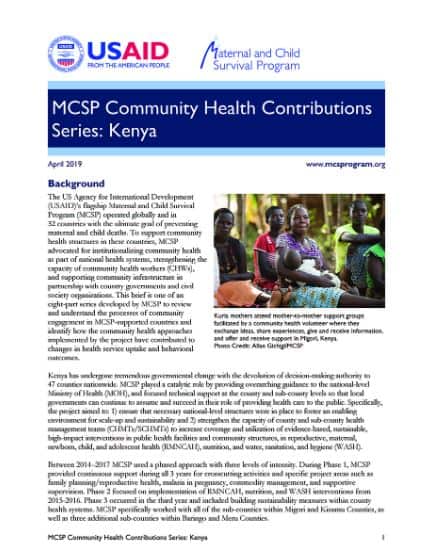 MCSP advocated for institutionalizing community health as part of national health systems, strengthening the capacity of community health workers (CHWs), and supporting community infrastructure in partnership with country governments and civil society organizations. These briefs comprise an eight-part series developed by MCSP to review and understand the processes of community engagement in MCSP-supported countries and identify how the community health approaches implemented by the project have contributed to changes in health service uptake and behavioral outcomes.
Featured countries:
ORGANIZATION
CORE Group
Dimagi
USAID
YEAR PUBLISHED
2014
DESCRIPTION
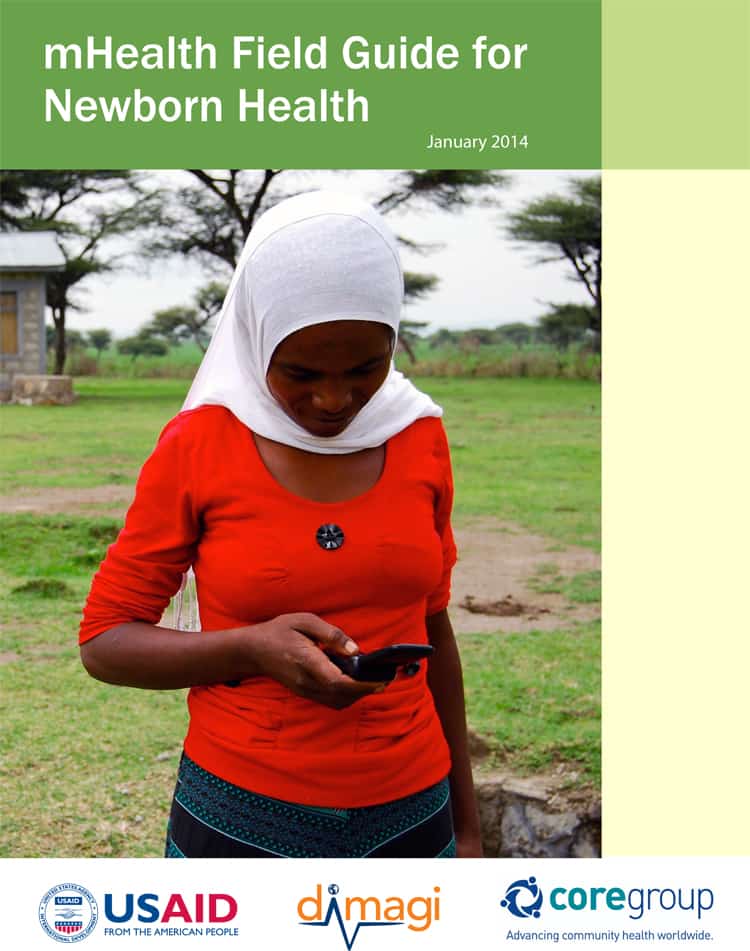
This guide that explains how mHealth serves newborn health through referral and tracking of mothers and infants, decision support for CHWs, CHW supervision, scheduling and tracking postpartum and postnatal visits, and teaching and counseling for mothers and families. Case studies are provided from Afghanistan, India, Malawi and Indonesia. Links to resources for planning, implementation and evaluation are included along with lessons learned across the case studies.
Learn more about CORE Group’s mHealth work here.
 Social accountability interventions present various approaches that support citizens’ participation, direct or indirect, in dialogue with service providers and other officials with a goal of developing a collaborative relationship to improve quality of service provision. Despite recent attention on social accountability interventions, progress on updating or adapting how these interventions are monitored and evaluated has been slow. A better understanding of how social accountability interventions are monitored and evaluated can support greater collective learning on implementing and studying social accountability and such collective learning can support adaptations to social accountability interventions that are more likely to be embedded, scaled-up, and institutionalized. This literature review aims to summarize how social accountability interventions are monitored and evaluated, provide an overview of the current landscape of social accountability, and conclude with key issues related to the monitoring and evaluation of social accountability that merit further discussion and reflection.
This resource was created in partnership with Save the Children and Johns Hopkins Bloomberg School of Public Health.
ORGANIZATION
IMA World Health
YEAR PUBLISHED
2019
DESCRIPTION
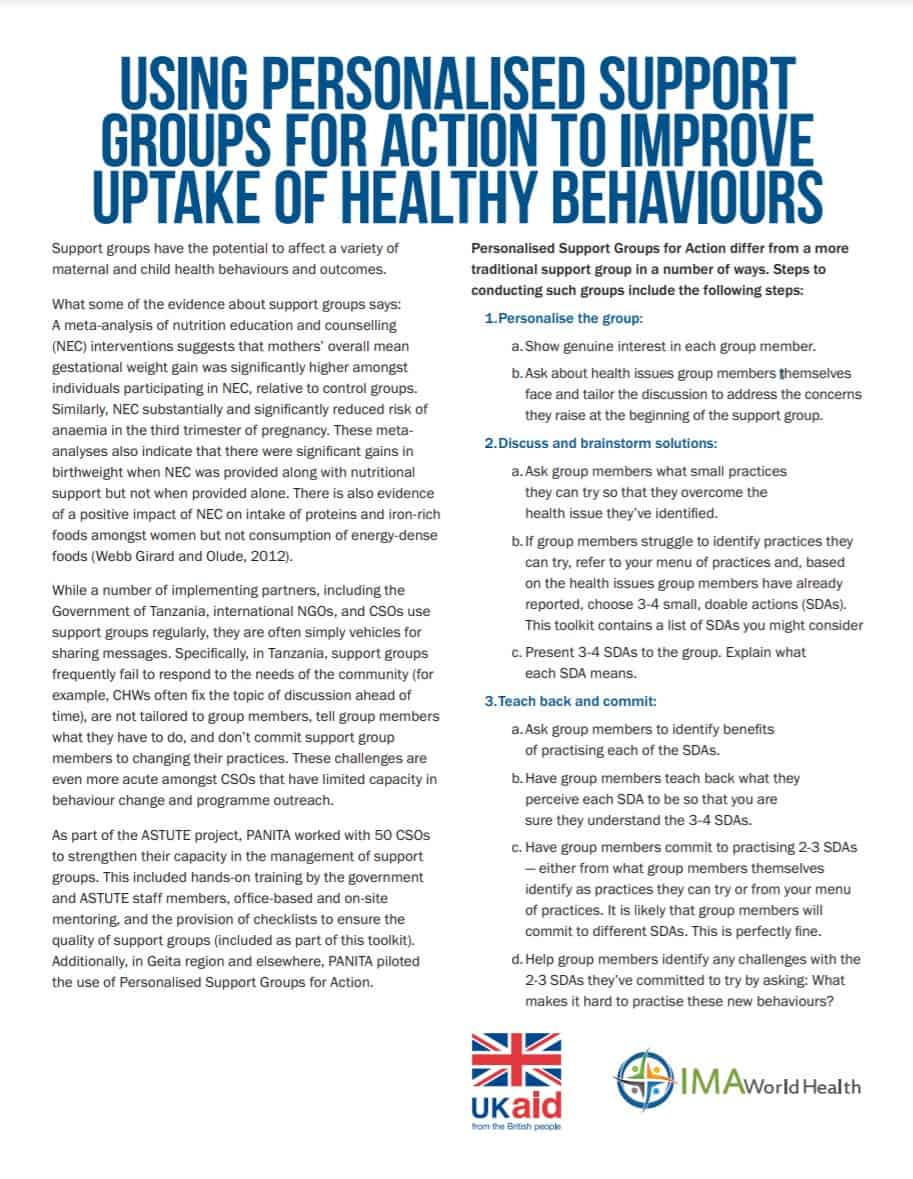
The Mtoto Mwerevu Stunting Reduction Toolkit is a resource for government and organisations involved in addressing stunting and broader nutrition issues in Tanzania. Its goal is to provide government, donors, non-governmental organisations, and civil society organisations (CSOs) with programmeming recommendations and tools to help implement successful multi-sectoral social and behaviour change (SBC) interventions aimed at preventing and reducing
stunting.
Working with the Government of Tanzania (GoT), the DFIDfunded ASTUTE stunting reduction programme developed the toolkit. The ASTUTE programme, implemented by IMA World Health, began in 2016 and works in five Lake regions of Tanzania: Mwanza, Shinyanga, Geita, Kigoma, and Kagera. During the programme, IMA has worked closely with government and project partners to develop several new tools (including checklists, guidelines, job aids, etc.) to address stunting for use by community volunteers, CSOs, and government at all levels.
Through the toolkit, you will learn about tools and approaches ASTUTE used to improve nutrition in the Lake zone of Tanzania. It may also help other regions identify and scale-up successful SBC and multi-sectoral nutrition interventions. All pieces of the toolkit align with the GoT National Multisectoral Nutrition Action Plan.
ORGANIZATION
CORE Group
CCRDA
YEAR PUBLISHED
2012
DESCRIPTION
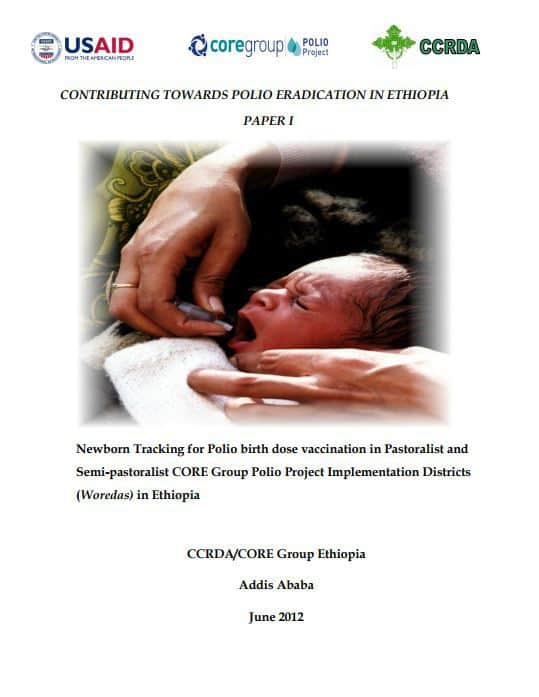
The main objective of this study was to examine pregnancy and child delivery practices and identify mechanisms for improving polio birth dose coverage in CGPP implementation districts/woredas.
ORGANIZATION
CORE Group
FANTA
FHI360
Save the Children
USAID
YEAR PUBLISHED
2015
DESCRIPTION
The Nutrition Program Design Assistant is a tool to help organizations design the nutrition component of their community-based maternal and child health, food security, or other development program. The tool focuses on prevention and also provides guidance on recuperative approaches that are needed when there is a high prevalence of acute malnutrition. The tool has two components: (1) a reference guide for understanding the nutrition situation and identifying and selecting program approaches, and (2) a workbook to record information, decisions, and decision-making rationale. The workbook is available as a pdf or Word file, and includes a separate Excel file with adaptable templates to use as needed for data collection and developing a Logical Framework.
The 2015 updated version reflects several changes in the nutrition programming landscape, including:
- New initiatives such as the 1,000 days and Scaling Up Nutrition movements
- New research/best practices, including revisions to World Health Organization micronutrient guidelines, the 2013 Lancet series on maternal and child nutrition, and guidelines on treatment of moderate acute malnutrition
- New programming guidance from donors
The creation of the tool was a highly collaborative effort coordinated by FANTA, Save the Children (including the Technical and Operational Performance Support Program), and the CORE Group’s Nutrition Working Group.
ORGANIZATION
AI.COMM
CORE Group
InterAction
International Federation of Red Cross and Red Crescent Societies (IFRC)
Pandemic Influenza Contingency (PIC) Office for the Coordination of Humanitarian Affairs (OCHA).
World Health Organization
YEAR PUBLISHED
2009
DESCRIPTION
The Humanitarian Pandemic Preparedness (H2P) Initiative and its many partners have developed ready-to-use training curricula for district- and community-level leaders, and community volunteers and workers in order to minimize morbidity and mortality in the event of an influenza pandemic. The time to put these tools into action is now.
The curriculum has separate tracks for district/community leaders and for first responders (community volunteers and workers) at the community level.
ORGANIZATION
CORE Group
FSNetwork
USAID
YEAR PUBLISHED
2015
DESCRIPTION
This curriculum equips trainers to lead a short skill-building workshop to provide meeting facilitators with some new “tools” and techniques for facilitation. We encourage trainers to modify this workshop as necessary to fit your audience and your needs.
This workshop is based on a session conducted for CORE Group in April 2015 to improve the ability of working group chairs to facilitate actively engaged working groups. The workshop was then modified for TOPS to focus on knowledge management practitioners and other development practitioners who implement food security and nutrition activities and who run or participate in a community of practice, working group, task force or project team. The curriculum has been adapted based on workshops held in July and August 2015 in Washington, DC.
Download additional documents and handouts here.
ORGANIZATION
Catholic Relief Services
USAID
YEAR PUBLISHED
1999
DESCRIPTION
This manual is intended as a tool for PVO staff, their NGO and government partners to use in evaluating development projects and programs. The evaluation approach presented here is particularly relevant to process evaluations in which the aim is to assess the program implementation process. This methodology has been used in programs in a number of countries and found very effective. The evaluation methodology focuses on the analysis of program activities and strategies, which have been implemented and on the development of“lessons learned” which can be applied in the future. Given this orientation, it is particularly well suited for use in mid-term evaluations of ongoing programs. The concept of a “participatory evaluation methodology,” used here, implies that program implementers are actively involved in all steps of the evaluation process. While participatory approaches are currently very popular in development programs, it is my belief that participation is effective only when the aim of the participation is clear and when a process to structure and channel that participation is clearly defined. This manual describes a simple and straightforward way in which program stakeholders can be involved in planning and carrying out a program evaluation.
ORGANIZATION
Christian Children’s Fund (CCF)
CORE Group
USAID
YEAR PUBLISHED
2008
DESCRIPTION
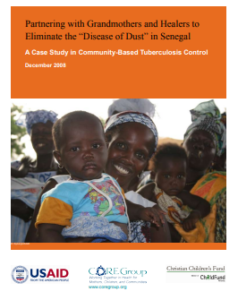
In 2003, Christian Children’s Fund (CCF) Senegal began to offer community-based TB services. This case study documents that effort and suggests that community health staff and volunteers, with relatively short training, are able to successfully play critical roles within the Ministry of Health’s national tuberculosis program. This success relies on providing the health workers and volunteers with clear knowledge of what they were able to do themselves and when to refer to the health center. Their knowledge and skills are regularly assessed and reinforced through close and supportive supervision. Community participation is the second important piece, indispensible in overcoming powerful stigma.
ORGANIZATION
American Red Cross
CORE Group
YEAR PUBLISHED
2003
DESCRIPTION
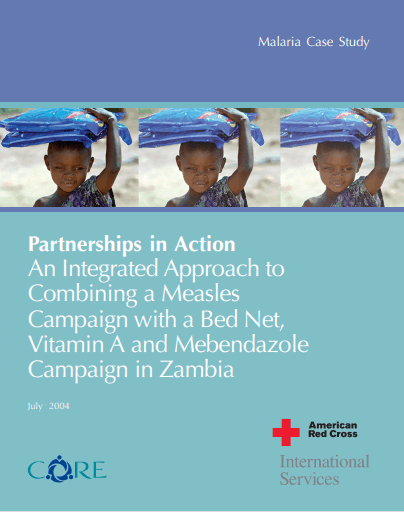
This case study describes how the American Red Cross (ARC) integrated a 2003 campaign to distribute free, insecticide-treated bed nets (ITNs) and provide vitamin A and mebendazole with a cross-agency Measles Partnership campaign in Zambia. The campaign was developed following a successful 2002 measles/bed net distribution pilot study in Ghana and was conceived in part to assist Zambia in reaching the Roll Back Malaria Partnership goal of halving malaria mortality in African countries by 2010.
ORGANIZATION
CORE Group
YEAR PUBLISHED
2003
DESCRIPTION
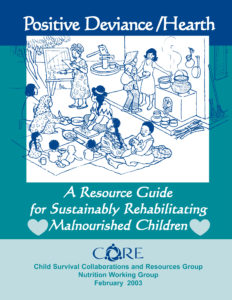
Positive Deviance/Hearth is a successful home-based and neighborhood-based nutrition program for children who are at risk for malnutrition in developing countries. It has enabled hundreds of communities to reduce their levels of childhood malnutrition and to prevent malnutrition years after the program’s completion.
The “positive deviance” approach is used to find uncommon, beneficial practices by mothers or caretakers of well-nourished children from impoverished families. The approach calls for spreading these practices and behaviors to others in the community with malnourished children.
A “hearth” is the setting where the nutrition education and rehabilitation part of the program is carried out. Suggesting a family around a fireplace or kitchen, “hearths” are carried out in home settings where caretakers and volunteers prepare “positive deviant” foods. They practice beneficial child care behaviors and feed malnourished children with extra energy-rich/calorie-dense supplemental meals.
- Answers to frequently asked questions on PD/Hearth
- What are the essential elements of an effective PD/Hearth program?
- Where will PD/Hearth work?
- How does PD/Hearth complement Ministry of Health Essential Nutrition Services?
- How does PD/Hearth fit with other nutrition and child survival interventions?
 [/vc_column_text]
ORGANIZATION
United States Institute of Peace
YEAR PUBLISHED
2009
DESCRIPTION
This working paper addresses the following questions. What do we know about the impact of war on health and health systems? What have we learned about effective strategies to help states meet the health needs of their populations in the aftermath of conflict? What is the appropriate foundation for a policy on post-conflict health recovery? If health reconstruction is to be a priority, what are adjustments needed in U.S. foreign policy?
ORGANIZATION
Johns Hopkins Bloomberg School of Public Health
YEAR PUBLISHED
2013
DESCRIPTION
Primary health care in the context of global health, and from the standpoint of the most disadvantaged populations in low-income populations around the world, represents the undisputed long-term means to improve population health, yet it has been one the most neglected topics on the global health agenda. There are many reasons for this, which are explored in this paper, but the current renewed interest in primary health can be attributed to several converging trends noted in this paper.
ORGANIZATION
CORE Group
YEAR PUBLISHED
2003
DESCRIPTION
AIN-C (Atención Integral de la Niñez en la Comunidad) is a preventive health program created in Honduras to prevent mild and moderate malnutrition through a focus on growth promotion. This study examines the positive aspects and implementation challenges faced by NGOs using AIN-C strategies used in Honduras. The study presents recommendations based upon implementation experiences of integrated community-based child health care in Honduras. It also includes analysis NGOs past participation in AIN-C policy stages and considers the desirability of active NGO engagement in policy formation and program design in the future.
ORGANIZATION
CORE Group
YEAR PUBLISHED
2004
DESCRIPTION
The purpose of this paper is to explore how multi-sectoral approaches are used within community based child health and development programs and the evidence-base to support that use. It seeks to answer three questions: 1) how do NGOs define a multi-sectoral platform; 2) how do NGOs implement multi-sectoral platform to achieve better or more sustainable health outcomes; and 3) how can child health programmers work effectively with other sectors to support community-based improvements in child health. This paper represents the results of a literature review, key informant interviews, abstract selection process to identify case studies, and a workshop designed to explore the different issues and approaches.
ORGANIZATION
CARE
Food for the Hungry
Food Security and Nutrition Network
USAID
YEAR PUBLISHED
2017
DESCRIPTION
The Technical and Operational Performance Support (TOPS) Program and CARE USA are pleased to offer this set of field-friendly activities entitled Realize: Social and Behavior Change for Gender Equity and Diversity (SBC for GED). The aim of these lessons is to build awareness, facilitate critical reflective dialogue, and explore potential action to improve gender equity and diversity among development staff and community members and to identify GED linkages within social and behavior change interventions to increase their effectiveness.
The activities are designed to be experiential, to encourage new thought and communication patterns that motivate people to change gender norms (and other types of societal norms) that impede the success of development programming – in health, agriculture, and other sectors.
 [/vc_column_text]
ORGANIZATION
ReBUILD Consortium
YEAR PUBLISHED
2017
DESCRIPTION
This report focuses on how equitable health systems can be created. It defines health systems as “social institutions in which access and experiences are determined by a complex set of social factors and relations.” Oftentimes, patterns of social exclusion manifest themselves in the healthcare systems of certain countries, making it hard for disadvantaged individuals to gain proper care. Thus, this piece touches upon how to break down barriers of healthcare exclusion.
 [/vc_column_text]
ORGANIZATION
ReBUILD Consortium
YEAR PUBLISHED
2017
DESCRIPTION
This report focuses on developing health systems in crisis-affected settings. There has been large growth in field, accompanied by efforts to develop systems in the Global South. It is greatly important to develop the capacity of these countries to develop their health systems, as they are currently very weak. This piece touches upon information discussed at the ReBUILD Consortium, centering around health systems in conflict-impacted areas.
ORGANIZATION
Academic Journal: Global Health Science And Practice
YEAR PUBLISHED
2013
DESCRIPTION
Progress in achieving the Millennium Development Goal of reducing under-5 mortality is lagging in many countries, particularly in Africa. This paper shares evidence and insights from a low-cost behavior-change innovation in a rural area of Mozambique. About 50,000 households with pregnant women or children under 2 years old were organized into blocks of 12 households. One volunteer peer educator (Care Group Volunteer, or CGV) was selected for each block. Approximately 12 CGVs met together as a group every 2 weeks with a paid project promoter to learn a new child-survival health or nutrition message or skill. Household surveys were conducted at baseline and end-line to measure nutrition-related behaviors and childhood nutritional status. More than 90% of beneficiary mothers reported that they had been contacted by CGVs during the previous 2 weeks. In the early implementation project area, the percentage of children 0–23 months old with global undernutrition declined by 8.1 percentage points from 25.9 to 17.8%. In the delayed implementation area, global undernutrition declined by 11.5 percentage points from 27.1% to 15.6%. Using the Care Group model can improve the level of global undernutrition in children at scale and at low cost. This model shows sufficient promise to merit further rigorous testing and broader application.
ORGANIZATION
USAID
YEAR PUBLISHED
2018
DESCRIPTION
Since 2015, MCSP has worked closely with Malawi partners to advance social accountability documentation and research . UNICEF, with funding from the Gates Foundation, implemented the project ‘Social Accountability for Every Woman Every Child’ (SAcc EWEC) in Malawi from 2016 – 2018. The project worked to facilitate community and civil society organization platforms to carry out constructive engagement for social accountability at different levels of the system. This was done through evidence generation, dialogue and debate for responsiveness and quality delivery of reproductive, maternal, newborn, child and adolescent health services based on duty bearers’ responsibilities.
On September 6, 2018, UNICEF and USAID co-convened a round table meeting in Lilongwe, Malawi, to bring together 52 stakeholders from civil society, government, academia and funding agencies to discuss the work done under the SAcc EWEC project and the broader learning context for social accountability in Malawi.
ORGANIZATION
CORE Group
YEAR PUBLISHED
2008
DESCRIPTION
This paper talks about a project with the aim of expanding the scale and impact of community case management programming for children under-five without good access to health facilities. Save the Children, with support from the CORE Group, undertook an advocacy effort with the Health Reform Unit at the Bolivian Ministry of Health to improve the quality of and access to community pharmacies with trained health promoters in rural areas. Developed as a parallel structure to the government health system, SC sought to better link the “botica” (pharmacies) to the MOH service system for drug supply and refilling and developed a three-tiered training approach to ensure that botica promoters were better trained and supervised. By the end of the project time period, the botica manual was aligned with national IMCI guidelines and simplified for low literacy workers, refilling forms were adapted to be compatible with health system information needs, a training course was piloted in five municipalities, and training of trainer sessions were conducted in seven of the nine departments in Bolivia.
 [/vc_column_text]
ORGANIZATION
Global Health Workforce Alliance <b \>
WHO <b \>
IFRC <b \>
UNICEF <b \>
UNHCR
YEAR PUBLISHED
2011
DESCRIPTION
This Joint Statement was developed by the Global Health Workforce Alliance together with the IFRC, UNHCR, UNICEF, and WHO. It aims at drawing attention to the vital role played by CHWs in emergency risk management; promoting the scale-up, training, and involvement of CHWs, and reinforcing the community-based health workforce. The Joint Statement covers the following areas: community-based actions are critical in managing emergencies; many different groups many different groups make up the community-based health workforce; the community-based health workforce contributes to healthier, safe and more resilient communities; the critical contribution of the workforce is not routinely recognized; existing health systems need to be well prepared for emergencies; health systems should reinforce PHC to be better prepared in emergencies; and what countries and partners can do.
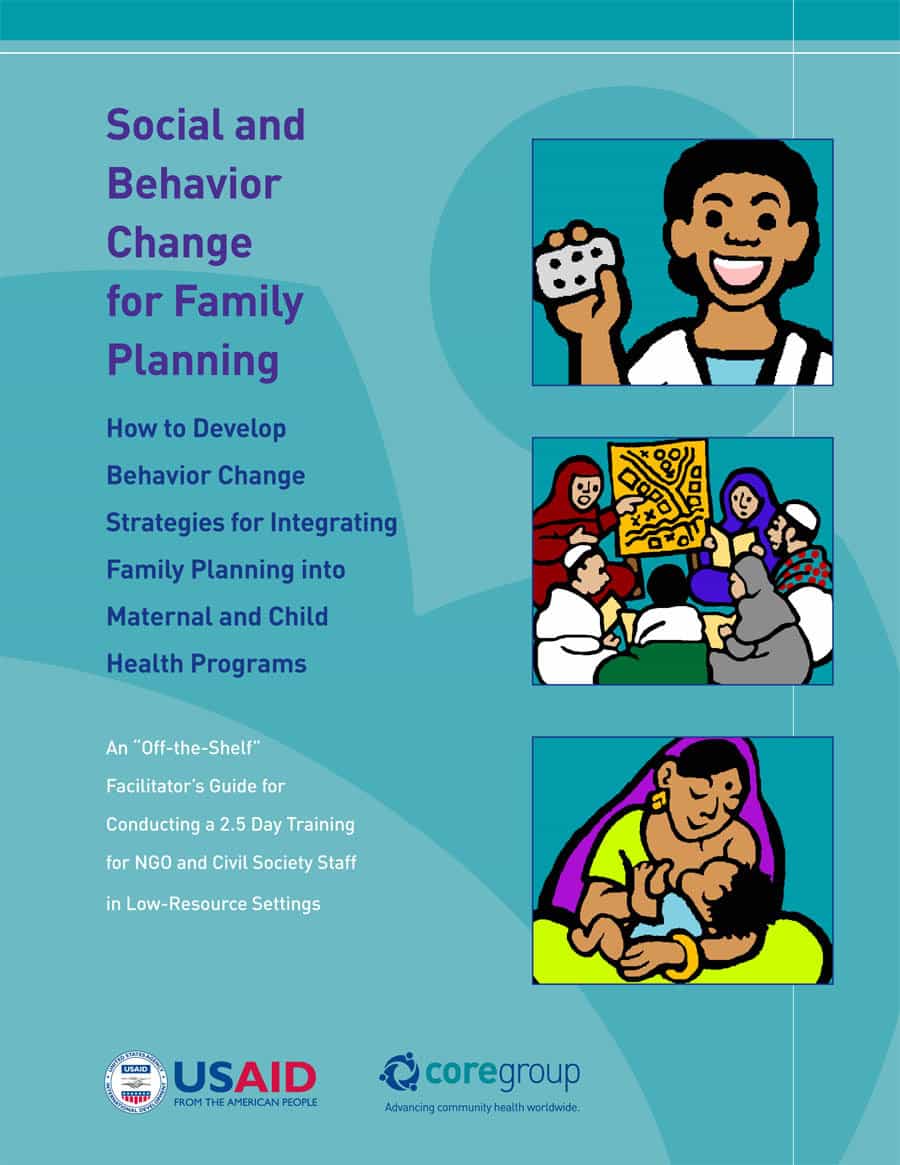
ORGANIZATION
CORE Group
USAID
YEAR PUBLISHED
2012
DESCRIPTION
Many maternal and child health programs want to add family planning (counseling, referrals or even services) into their programs. One way to get started is through social and behavior change. That means learning about the community’s family planning knowledge, attitudes and practices, and then creating strategies based on what is learned. Many health program and government staff would like to get the skills needed for this process—but time and resources are not available for a week(s) long training.This curriculum can share these useful skills without requiring a lot of time or resources. It is designed to be used “off-the-shelf”—which means it is not necessary to bring in an outside trainer. A local staff person or team can use this guide to run a 2.5 day training course that teaches the basics of “designing for behavior change.” This can serve as an energizing starting point for addressing family planning by building skills and helping staff get started in social and behavior change. The concepts and tools can actually be applied to other topics as well, including maternal and child health, nutrition, infectious disease care and control, sanitation, and more.
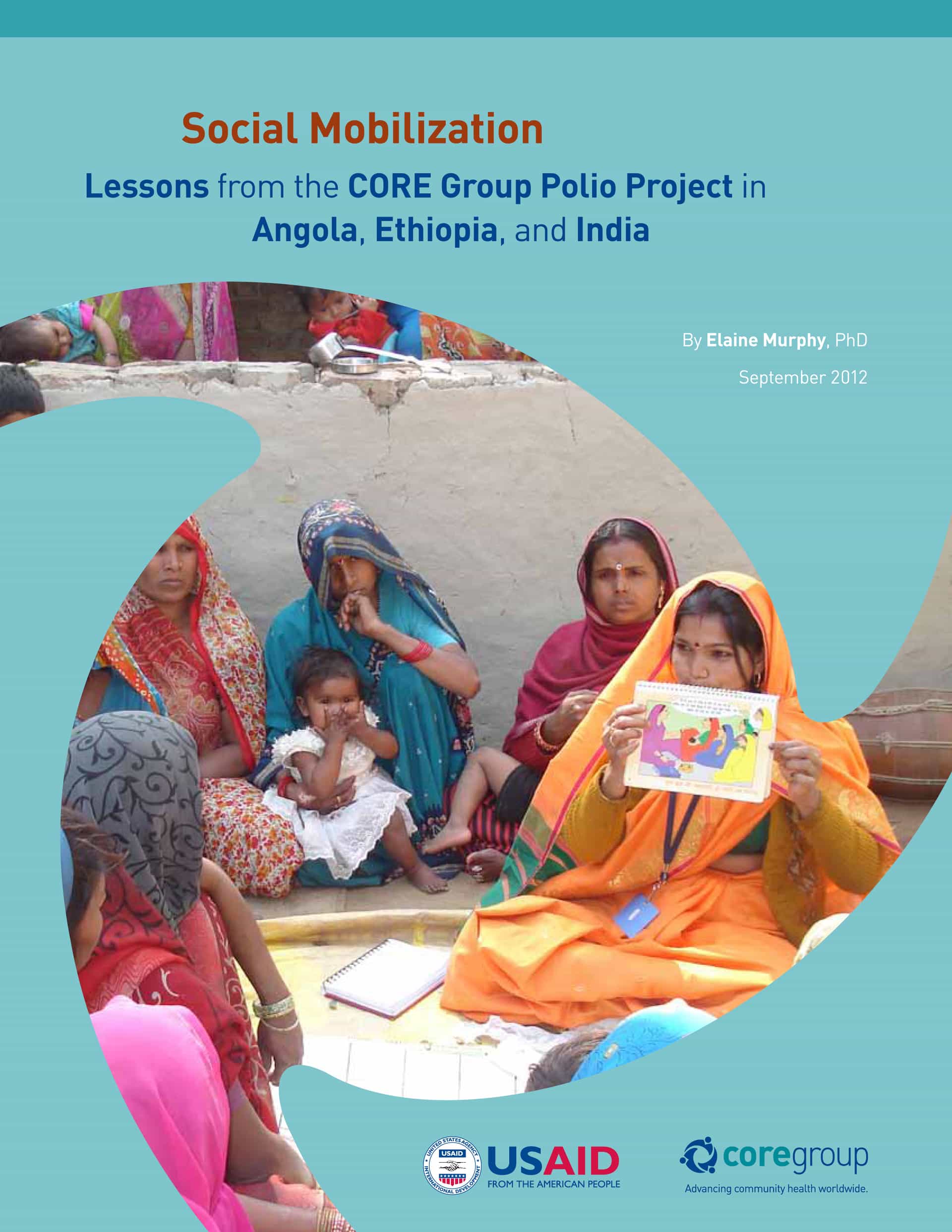
ORGANIZATION
CORE Group
USAID
YEAR PUBLISHED
2012
DESCRIPTION
The CORE Group Polio Project (CGPP) and its partners in India, Angola, and Ethiopia have led successful social mobilization efforts to reach difficult-to-access populations critical for polio eradication. These include extremely poor rural and urban communities, ethnic and religious minorities who resist immunizing their children, and others such as newborns, pastoralists, migrants, and those in transit across national borders. Working through grassroots nongovernmental organizations (NGOs), CGPP social mobilization activities have contributed to the current polio-free status in all three countries and have improved the coverage of children’s routine immunizations as well. Marking a shift from the earlier dominance of epidemiological perspectives, today behavior-change communication — advocacy, interpersonal communication, and social mobilization — is recognized internationally as the way forward in this final phase of polio eradication.
This shift is reflected in WHO’s May 2012 Global Polio Emergency Plan:
- Establish/scale up social mobilization networks at community level in infected areas;
- Undertake systematic monitoring to identify and understand the social reasons for chronically missed children;
- Build interpersonal skills to enhance vaccination performance, including addressing reticence and refusal;
- Apply best practices for reaching high-risk and chronically missed children (e.g., migrant and underserved);
- Re-energize public support, motivate vaccinators, enhance ownership of key stakeholders (media, physicians), and increase local leader accountability; and 6) Apply to routine immunization lessons on identifying and reaching missed children, especially among underserved, mobile, and minority populations.
This report places CGPP within the context of the Global Polio Eradication Initiative (GPEI) that began in 1988, defines and describes three varieties of social mobilization, and presents as case examples CGPP’s successful social mobilization work in India, Angola, and Ethiopia. It is intended for those interested in best practices to move polio eradication from its current 99.9 percent success rate to 100 percent, and all who want to “reach the hardly reached” with routine immunization, new vaccines and other life-saving maternal and child health services.
 [/vc_column_text]
ORGANIZATION
Emergency Nutrition Network (ENN)
YEAR PUBLISHED
2017
DESCRIPTION
This article is a report on joints efforts in nutrition emergency coordination and nutrition development coordination over the last ten years. Both UNICEF and Global Nutrition Cluster Strengthening Nutrition Humanitarian Action Phase 2 synthesis review examined what is need to operationalize the transition of cluster structures into national coordination platforms. This review identifies working joint, government, humanitarian, and development understanding of this coordination, in order to achieve success in results.
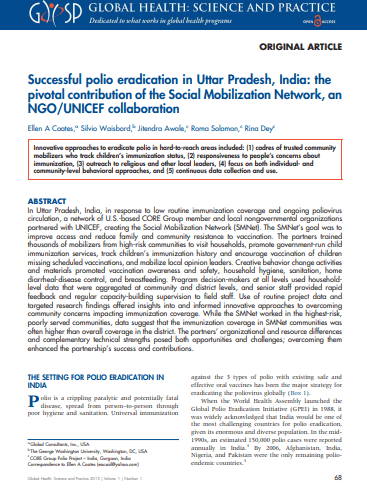
ORGANIZATION
Academic Journal: Global Health Science And Practice
YEAR PUBLISHED
2013
DESCRIPTION
In response to low routine immunization coverage and ongoing polio virus circulation in Uttar Pradesh, India, a network of U.S.-based CORE Group member and local nongovernmental organizations partnered with UNICEF, creating the Social Mobilization Network (SMNet). Its goal was to improve access and reduce family and community resistance to vaccination. The partners trained mobilizers from high-risk communities to visit households, promote government-run child immunization services, track children’s immunization history and encourage vaccination of children missing scheduled vaccinations, and mobilize local opinion leaders. Behavior change activities and materials promoted vaccination awareness and safety, household hygiene, sanitation, home diarrheal-disease control, and breastfeeding. Use of routine project data and targeted research findings offered insights into and informed innovative approaches to overcoming community concerns impacting immunization coverage. While the SMNet worked in the highest-risk, poorly served communities, data suggest that the immunization coverage in SMNet communities was often higher than overall coverage in the district. The partners’ organizational and resource differences and complementary technical strengths posed both opportunities and challenges; overcoming them enhanced the partnership’s success and contributions.
ORGANIZATION
CORE Group
Food Security and Nutrition Network
USAID
YEAR PUBLISHED
2013
DESCRIPTION
This is the first in a series of quick guides produced by the Technical and Operational Performance Support (TOPS) Program to improve knowledge sharing and program learning by development practitioners. The guide focuses on identifying appropriate formats and approaches for presentations, group discussions and problem solving sessions that will maximize peer-to-peer learning and agenda-setting for the future.
The quick guide format, it is hoped, will make a number of easily adopted approaches and techniques accessible to a broad swathe of development practitioners.
ORGANIZATION
American College of Nurse-Midwives
CORE Group
Save the Children
USAID
YEAR PUBLISHED
2011
DESCRIPTION
This flipbook, released in Nov. 2011, contains key messages that pregnant women and their families need in order to plan care of an infant at home right after birth. It focuses on essential actions families can take both to prevent newborn death and illness and to promote healthy newborn development.
This material encourages use, whenever possible, of skilled birth attendants and clinical services and, where that is not realistic, provides some information on what families can do for pregnant women and care of the baby at birth. Even where mothers deliver with a skilled birth attendant in a health facility, they are often sent home within 6–12 hours of delivery. This material can also be used with women going home soon after delivery in a health facility. It highlights danger signs in the infant that require immediate attention and referral.
This tool was developed by CORE Group, in collaboration with Save the Children, the American College of Nurse-Midwives, and MCHIP.
This material is meant for outreach to pregnant women and their families with poor access to health services. These communities may also have low-literacy levels and/or poor access to health information. It is important to test the material with outreach workers and community members to be sure the messages are understood and acceptable. For guidance on adapting or testing this material, please email contact@coregroupdc.org.
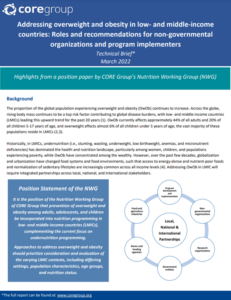
ORGANIZATION
CORE Group
YEAR PUBLISHED
2022
DESCRIPTION
This technical brief shares highlights from a position paper by CORE Group’s Nutrition Working Group (NWG).
The proportion of the global population experiencing overweight and obesity (OwOb) continues to increase. OwOb currently affects approximately 44% of all adults and 20% of all children 5-17 years of age, and overweight affects almost 6% of all children under 5 years of age; the vast majority of these populations reside in LMICs. It is the position of the Nutrition Working Group of CORE Group that prevention of overweight and obesity among adults, adolescents, and children be incorporated into nutrition programming in low- and middle-income countries (LMICs), complementing the current focus on undernutrition programming.
ORGANIZATION
CORE Group
World Relief
YEAR PUBLISHED
2010
DESCRIPTION
The Care Group Difference guide, developed by World Relief, explores the evidence base for the Care Group model, offers criteria to assist project managers in determining the feasibility of using this approach within their own programs, and provides a step-by-step guide for starting and sustaining care groups. A care group is a group of 10 to 15 volunteer, community-based health educators who regularly meet together with project staff for training, supervision and support. Care group volunteers provide peer support, develop a strong commitment to health activities, and find creative solutions to challenges by working together as a group. World Relief pioneered the Care Group model as part of its Vurhonga child survival projects in Mozambique (1995-2003).
Other organizations, including Food for the Hungry International and Curamericas have since applied the care group model in a Title II Food Security project in Mozambique and a CSP in Guatemala, respectively (see Appendix B for project information).
World Relief is also exploring ways to use the care model in other health and development contexts. For example, World Relief is using care groups to train peer educators in HIV/AIDS prevention and care. While the interventions differ, the core elements of the care group model — multiplication of volunteer effort, peer support and community mobilization — remain the same.
ORGANIZATION
CORE Group
USAID
YEAR PUBLISHED
2003
DESCRIPTION
Tuberculosis (TB) kills 1.5 million people each year. It is the greatest curable infectious killer worldwide. One-third of the world’s population is infected with the TB bacterium and nearly 9 million people become sick with active TB each year. This document outlines nine project-design challenges most likely to face those working at the community level. This document should be used as a primer for gaining a better understanding of the challenges community-based programs and providers face, as well as some of the ways nongovernmental organizations (NGOs) are currently addressing these challenges. This document is not intended to outline a comprehensive community-based TB effort. There is no right way to respond to the challenges outlined here. The best way to answer them will depend on the nature of your organization and in the setting in which you seek to do this work.
ORGANIZATION
World Relief
YEAR PUBLISHED
2000
DESCRIPTION
The HEARTH program arranges for volunteer community women who have received brief training in nutrition to feed malnourished children one nutritious meal and snack each day for two weeks, in addition to the children’s normal diet. Within two weeks of receiving about 500 extra calories a day, children start to “brighten” and mothers realize the change is from additional food. The mothers or caretakers then continue on their own, with the next two weeks being under the watchful eye of the volunteer mothers.
ORGANIZATION
CORE Group
USAID
YEAR PUBLISHED
2003
DESCRIPTION
The purpose of this guide is to assist NGOs, Ministries of Health, and bilateral and multi-lateral organizations in implementing a two and a half day workshop on Household and Community IMCI. The objectives of the workshop include increasing understanding of HH/C IMCI, developing a common perspective on HH/C IMCI in order to recognize the potential inputs by all partners, practicing using the framework as a tool for identifying and developing HH/C IMCI activities across partners and sectors and increasing cross-organizational and cross-sector collaboration for HH/C IMCI.
ORGANIZATION
Helen Keller International
YEAR PUBLISHED
2004
DESCRIPTION
The purpose of the guide is to consolidate lessons learned on the process of integrating vitamin A supplementation (VAS) into community-directed treatment with ivermectin (CDTI), and to promote replication of the experience. The Guide is designed to: Introduce key concepts, principles, issues, and terminology related to integration of VAS into CDTI; Outline practical guidelines and steps that may be useful in the design, adaptation, implementation, monitoring and evaluation of integrated VAS and CDTI activities in your country or project areas; Provide information on sources and resources of support programs, tools on onchocerciasis and vitamin A deficiency (VAD) control, and integration of VAS into CDTI.
ORGANIZATION
CORE Group
YEAR PUBLISHED
2013
DESCRIPTION
This manual is a guide for non-governmental organizations carrying out child health programs to assess under-five mortality rates and evaluate programs using the CARE Group Model. By following this manual’s methodology to establish a Mortality Assessment for Health Programs (MAP) System, organizations can collect valid and precise information about vital events and detect statistically significant changes in under-five mortality rates over the life of a child health program. Our hope is that NGOs will find this manual practical and feasible to assess correlations between program activities and mortality trends in a variety of settings.
Links from Manual:
- Vital Events Database (ZIP)
- Pregnancy and Birth Register (PDF)
- Under Five Death Register (PDF)
- U5MR Trend Chart Creator (ZIP)
- Promoter Vital Event Monitoring Report Card – Chart Creator (XLS)
ORGANIZATION
CORE Group
USAID
YEAR PUBLISHED
2014
DESCRIPTION
The 1993 World Development Report (WDR), Investing in Health, deemed strengthening accountability as one of the core elements of health sector reform. Engaging communities and community-based workers in the process of measuring health status of children, in assessing causes of deaths, in defining high-risk groups, and in measuring changes in mortality over time will enable governments to achieve levels of under-5 mortality according to their commitments. Models involving International NGOs that used a social accountability approach in various sectors and at different levels including community, district, and national level, were reviewed as part of this paper and are presented regarding the processes undertaken to increase accountability and improve health outcomes. This paper presents common themes, challenges, and recommendations to expand and bring this approach to scale in the context of health and development.
ORGANIZATION
CORE Group
YEAR PUBLISHED
2006
DESCRIPTION
Tuberculosis (TB), one of the oldest diseases known to humankind, continues to claim roughly 2 million lives each year. Approximately one-third of the world’s population is infected with Mycobacterium tuberculosis, the bacterium that causes TB. Each year, close to 9 million new TB cases occur. The developing world is the worst affected with over 90% of all TB cases and TB deaths. Tuberculosis kills more youth and adults than any other single infectious agent in the world today.Today, tuberculosis has become the leading cause of death among HIV-infected individuals, accounting for about one-third of AIDS deaths worldwide. The present curriculum was used in a TB course held in Chennai, India in February 2006. As the only course designed specifically for PVOs, we hope that this manual will be used by others wishing to improve the technical quality of TB programs implemented by PVOs.
ORGANIZATION
USAID
YEAR PUBLISHED
2018
DESCRIPTION
This document summarizes two social accountability approaches that have been applied in Malawi for over a decade, with measurable successes. The authors’ intent is to further promote the engagement of civil society to strengthen national health systems, and to share useful experiences more broadly with colleagues within the United States Agency for International Development (USAID) as well as the wider global health community. This is part of a larger effort by the Maternal and Child Survival Program (MCSP) to encourage the incorporation of civil society engagement and the institutionalization of community health programming into the context of national health system strengthening.
The selection of social accountability case study topics was conducted collaboratively with USAID/Malawi, UNICEF, CARE’s Community Score Card Consulting Group, the Malawi Health Equity Network (MHEN), and the Malawi Social Accountability Task Force, among others.
ORGANIZATION
WHO
YEAR PUBLISHED
2017
DESCRIPTION
This editorial covers the challenges and lessons learned from immunization programs during conflicts in Syria and in Yemen. It also advocates for community engagement and effective policy frameworks to support public health programs in immunization efforts during humanitarian emergencies.
ORGANIZATION
WHO
YEAR PUBLISHED
2018
DESCRIPTION
The WHO Guideline on health policy and system support to optimize community health worker programmes, on which this product is based provides evidence-based policy guidance to support national strategies and investments to build fit-for purpose community-based health workforces. The increased coverage of essential health services and improved equity in coverage envisioned by well-functioning community health worker programmes will result in fewer deaths and illnesses and lower disease burdens.
ORGANIZATION
USAID
YEAR PUBLISHED
2017
DESCRIPTION
Civil society organizations (CSOs) are increasingly joining forces with public health personnel at the local and national levels to provide greater scrutiny of programs and budgets. Described as “social accountability,” common themes include: preparation and planning; involvement of marginalized and impoverished populations; identification of barriers for effective participation; interface meetings between civil society and governmental/public sector; measurable indicators of accountability and health outcomes; and rigorous evaluations of interventions.
These social accountability resources and tools are intended to assist CSOs, non-governmental organizations, and government health program planners, managers and staff to identify and adapt existing guides and tools for effective social accountability strategies.
The materials are divided into four sections: