Reaching zero-dose children in remote, mobile pastoralist settings requires community-owned solutions that work through—rather than around—existing cultural systems. In Ada’ar Woreda, respected Makafta (clan) leader Mohammed Humed has demonstrated how traditional governance structures can function as enduring engines for public health equity.
Supported by BPDO under CORE Group’s SGSI project, Mohammed participated in specialized consultations and digital health orientation—part of a 190-leader initiative across Mille, Kori, Dubti, and Ada’ar woredas that equipped designated traditional leaders with smartphones running KoboCollect. Mobilizing the Da’ala (extended-family unit heads) under his leadership, Mohammed leveraged their intimate, real-time knowledge of family movements across seasonal pastures to conduct comprehensive household listings in hard-to-reach settlements.
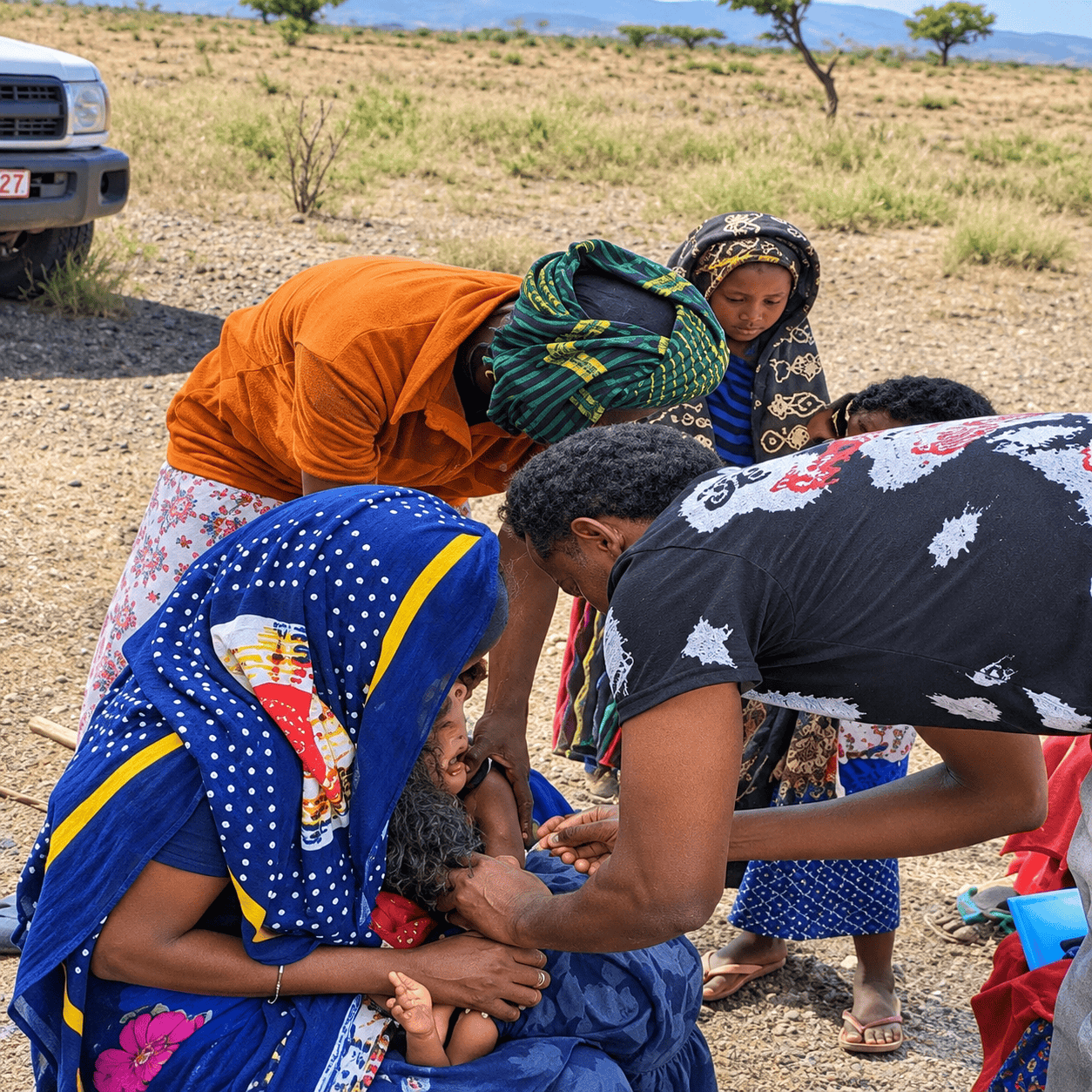
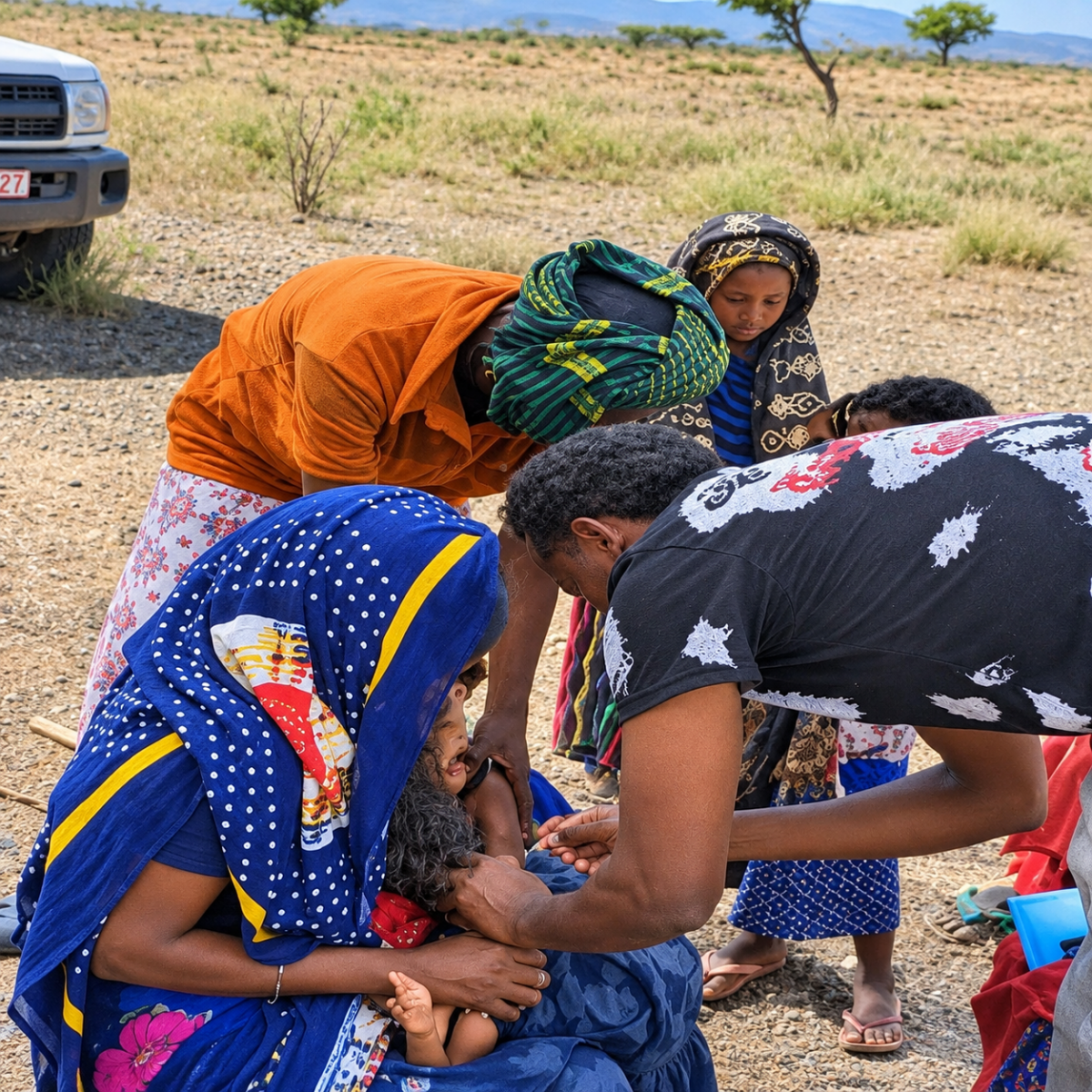
During outreach in remote Wantufursa Kebele, Mohammed identified 13-month-old Zahra Mohammed, who had never received a single vaccine. Taking end-to-end accountability, Mohammed:
- Registered Zahra digitally using KoboCollect to ensure accurate community-level tracking.
- Counseled Zahra’s mother, Bilila Ali, sitting with the family to address safety concerns and explain the long-term health value of vaccination.
- Facilitated linkage and verified delivery, guiding the family step-by-step to the SGSI-supported immunization point and confirming that Zahra received her initial life-saving doses.
For Zahra’s mother, Bilila Ali, having a trusted community elder bring clear guidance directly to her doorstep transformed uncertainty into confidence:
“Living here in Wantufursa Kebele, moving with our livestock, and dealing with the distance, it was hard to know about every health service available for our children. My daughter Zahra was over a year old, and because she had never received any vaccines, I worried she was unprotected, but I didn’t know where to turn or how the process worked. When our traditional leader, Mohammed, came to our household, he didn’t just register us—he sat down with me and calmly explained why these vaccines mattered so much for Zahra’s health and future. He answered all my concerns and guided us step-by-step on where to go. Because a trusted elder from our own community brought this message directly to our home, I felt confident and supported. Today, seeing Zahra receive her first life-saving vaccine gives me great peace of mind as a mother. I am deeply grateful for this support, and I now encourage other mothers in our community not to miss out on immunization.“
Because Makafta and Da’ala are permanent pillars of Afar society, embedding technical surveillance and referral skills within these structures ensures sustainability long after project cycles end. Today, Mohammed and his fellow Makafta leaders in Ada’ar continue to track, counsel, and refer zero-dose and under-immunized children across their communities.